

BLOG

A moment of clarity
Sometimes, certain phrases hit you square between the eyes – boom. “Yes, that is SPOT ON”. (Usually swiftly followed by “Dammit, wish I’d thought of that”)
WARNING – this contains a ‘rude’ word…
Sometimes, certain phrases hit you square between the eyes – boom. “Yes, that is SPOT ON”. (Usually swiftly followed by “Dammit, wish I’d thought of that”)
LIFE RULE 101
It happened to me a few months back. I was attending a Content Marketing Association (CMA) breakfast, all about content – obviously – and its uses on different platforms. There was someone from an influencer platform, a data scientist, and a designer among the panel, and I found it really interesting, as per. Thanks team CMA.
However, I was also interested in meeting Andy Barr, MD of 10 Yetis – a PR, digital and social agency from Gloucester. We’d got chatting over Twitter years back, but this was the first time to meet in person. Or IRL as the kids say. Proper nice gent, and we had a little workflirt/chat before the presentations kicked off.
He was up last and rattled through his top ten tips for PR, last of which really caught my attention. ‘Yes’ I thought to myself, ‘that is what I’ve been trying to explain for ages’.
The phrase? Simply:
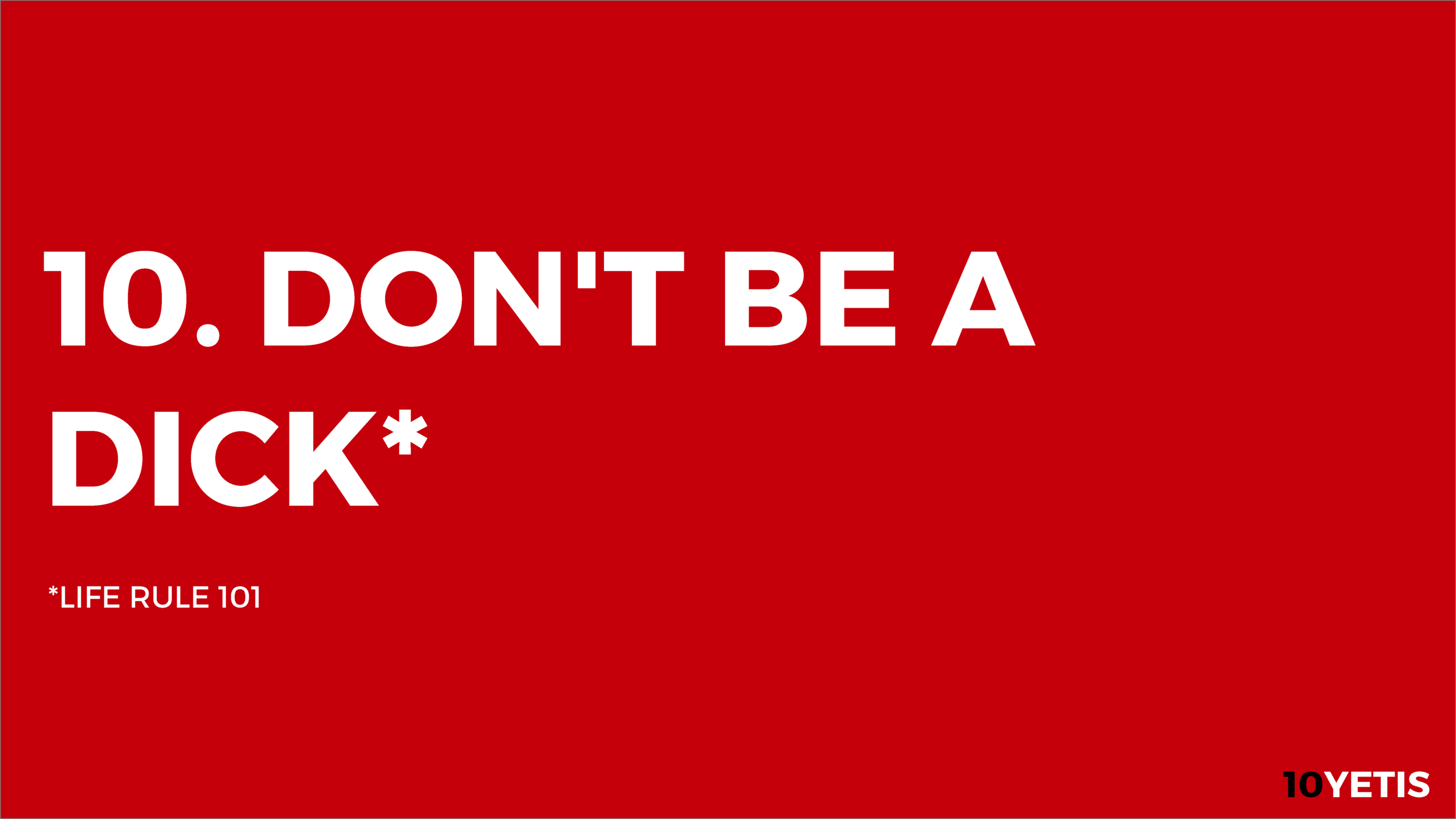
It sums up everything about… everything for me:
Treat people nicely
Be polite and kind
Listen
Ask “Are you OK?”
Don’t lie, be honest
Be patient and respectful
Understand other people’s views
And so on. It works on a professional level too. Don’t relinquish your ethics, do something you love, if you’re not happy, don’t moan – change it up, add value, help others out, surround yourself with good people, and be a good person... you get the idea.
I’m sure I‘ll find another phrase in due course but, for now, this sums up a lot of what I’m feeling right now, at this point in my life.
Might even adopt it as the official values for Authentic… Cheers Andy.
What do you think? Is it a swear word? Can you do well as a dick? Are there any phrases you’ve heard that sum things up for you? Comment below and let me know!

Campaign: LEGO – “Rebuild the world”
‘Rebuild the world’ is a clever, creative advertising and marketing campaign from everyone’s favourite Danish toy maker.
In the first of a series checking out some of the best marketing, advertising and PR work around, I’m taking a look at LEGO’s first brand campaign in 30 years.
‘Rebuild the world’ is a clever, creative approach from everyone’s favourite Danish toy manufacturer, emphasising the brand’s key attributes and speaking directly to the playful younger and not so younger (but think they are) audiences. The tone of the strapline is spot on, in my opinion – an empowering, positive message in changing times.
If that was a little deep, let me lighten the mood. Check out the launch video below:
The real-life/surreal chase scene engages from the start, with oversized items, heads twisting round, a giant dragon, flying cars and a big helping of clever twists and turns. It’s refreshing, playful and silly; it stands out from the crowd. And its something anyone who has ever picked up those little squares will recognise.
Boom. Straight back to childhood.
The potential of optimistic creativity
“It’s a way to think”.
LEGO is cleverly repositioning in a time when values and purpose are more important to consumers than ever. Instead of focusing solely on sustainability – which it is already making waves in, with using sustainable plastic and considering a potential rental scheme – they’re also utilising their authentic (!) purpose of creativity.

On their site, it says, “(LEGO) helps kids develop a creative mindset as they experiment, break the rules, fail and try again”. Resilience, optimism, fun and creativity all rolled into one. Empowering, eh?
Add to this some cultural creator partnerships (influencer, anyone?) with the most famous gymnast in the world, Olympian Simone Biles, and music producer Mark Ronson, and the sky’s the limit… perhaps.
All in all, a really solid, creative and engaging, purpose-driven campaign. More please.
What do you think? Let me know in the comments below.

Five mistakes to avoid when entering comms awards
Advice, hints & tips to write the best communications award entry – make the most of your next marketing, communication or PR award nomination.
Following on from last week’s blog, I thought I’d share some advice on how to make the most of your communications award entry – internal, consumer, B2B, digital, print, marketing, PR or otherwise.
For the last three years, I’ve had the privilege to judge the IoIC awards alongside some very talented people in the wider comms world – real game-changers at agencies, in-house and across all kinds of sectors.
‘Nerve-wracking’ is the how I’d best describe judging. Joining fellow judges in reviewing and scoring nominations is always tough. We’ve all been there – entering our beloved project or campaign, pressing send and hoping that we get recognised.
But I’ve noticed a few mistakes that – I feel – should be avoided to give your entry the best chance of success. Some may seem obvious to comms folk, but you’d be surprised – “do as I say, not as I do…”
Five mistakes to avoid when entering comms awards
Set objectives – Choose clear KPIs. Lay out what it is you want to achieve in non-emotive language. Facts and figures are the flavour of the day. Yes, it could be about staff retention or fewer accidents across production sites, but lay it out in black and white. Surprising how often this is missed/too watered down (i.e. ‘lower staff turnover’ alone isn’t sufficient).
Measure first – Whichever metric you’re measuring, do it before you begin any work. When judging, we’re always shocked at how little this is done. It can be anything – a spot survey of employee morale, dwell time on webpages, or amount of feedback to a printed magazine through to current staff turnover or health and safety mistakes at work. Whatever your objectives are, MEASURE FIRST.
Make it unique – Consider the judges. They could be reading dozens of entries in one day. Why should yours stand out? You’ve already (probably) done a good job of adapting your content, tone of voice and deliverables to your initial project audience; why not do it with your nomination…? One thing you could do is…
Get someone else to write it – Not the account manager or project lead. They may be too close to it, speaking in too much detail, and missing other parts of the story. Also, create a new angle depending on the type of award you’re going for. You can enter for different categories, but make the story suitably different. Copy & paste doesn’t cut it.
Evidence your results – Anecdotal is good, and adds to the narrative, but look back at your objectives. What did you say you were going to do? Did you do it? Even if you only went some way towards hitting your KPIs, then say so. Any tangible results are better than none.
Good luck with the next entry, and I hope the above helps.
Let me know what your thoughts are – do you agree or disagree with the five pieces of advice? Do you already do some of the above? Anything you’d add to the list?

"IC you, baby..."
A recap of the always-fun Institute of Internal Communications National Awards – the annual celebration of all things brilliant in the internal comms world.
“…shakin’ that (cl)ass (award)…” – almost works.
Last night was the always-fun Institute of Internal Communications National Awards – the annual celebration of all things brilliant in the IC world.
This year saw a few changes – firstly, the effervescent Jen Sproul (chief executive of the IoIC), in some killer red heels, was joined on stage by head judge and IoIC board stalwart Justine Stevenson, in a smooth, two-pronged presenting attack.
Secondly, the attendees. Busier than 2018 (great to see), the room was packed. And not just IC folk. Multiple tables brought wider teams, or people from different departments, in a real demonstration of how much IC is now valued. Shout out to communications infrastructure firm Arqiva (who also won best in-house team) and NATS (leading provider of air traffic control services) as good examples of this.
As the lines continue to (rightly) blur between internal and external comms, communicators in various sectors and industries are getting more time at the c-suite, board or any other table.
The calibre of projects, campaigns and teams (both house and agency) was particularly high. This is the third year I’ve had the privilege of being a judge, and nominations in my designated Storytelling category were impressive – both in terms of creativity and delivery, but also in measurement and objectives. Benchmarking and strategy were really well considered.
Thirdly, and most impressive, was the focus on people. From Tata Steel’s Tim Rutter for the special #WeMatterAtWork award, Rising Star for Harriet Small, Best IC Manager for Nicholas Wardle of One Housing Group, to a new Changemaker Award, with two fantastic IC heroes shortlisted – Katie Macauley for the great AB IC podcast and Sheila Parry for her strategic model Take Pride, which was won by the former.
Congratulations to all the teams and people involved; it’s great to be shortlisted, let alone win. You should all be very proud!
Talking of people, only right to mention the fantastic Brenda – who many of us have had the pleasure of dealing with over the years – who is moving on from the Institute. Thanks for all you’ve done, Brenda – you’ve kept the IoIC machine running!
More next year, please! Were you at the ceremony? What did you think of the awards?

The value of strategic communications
Does your organisation hold communications in a good light? Does the c-suite/senior leadership team recognise the potential value communications can play in achieving their objectives? Do you even know what your company’s strategy is?
Over the years, it’s been positive to notice a trend of communications taking an increasingly important role in the strategic running of businesses and organisations, across a range of sectors. People seem to be waking up to the value of great (or even good) comms.
Comms and PR teams have traditionally picked up things that shouldn’t be their priorities - mainly as they are helpful, positive people. However, this often means they were working on tactical projects with no clear strategic objective or oversight. That’s not to say the work was not fantastic, engaging, and creative.
Communications is increasingly forming part of strategic conversations with senior leaders, in boardrooms, at AGMs and cross-functionally in all sectors - as it should be.
“When should we include comms?”
One of the main challenges for communicators is being asked to retrospectively feed in or support delivery of a marketing plan, sales agenda, employee engagement programme etc. This is not the most efficient way to do things.
We are an inquisitive bunch, asking why, challenging perceptions and (where possible!) nailing that brief in terms of audience, messaging, platform and so on.
This is crucial for all modern communicators - asking why. It’s not to be a pain in the arse, but to confirm the outcomes (not just outputs), check “what good looks like” and ensure the best possible start to a campaign, project or strategy, so we are not asked to play catch up later on. If a plan is already rolling, it’s usually too late to add proper value.
Measurement and evaluation to prove this value is key to comms being respected and understood as crucial to business strategy. It’s also important to note that comms should not be the sole creators of strategy - it has to be a holistic and multifaceted process.
However, if we are not at the table, we will be unable to ask the right questions, engage other teams and show comms’ true value.
What do you think?
Does your organisation hold communications in a good light? Does the c-suite/senior leadership team recognise the potential value communications can play in achieving their objectives? Do you even know what your company’s strategy is?
Be interested to hear your thoughts on how communications is viewed and valued in your role – please comment below.
Thanks, Ad

Inspirational and practical insight at #BestPRactice19
My reflections on a great CIPR East Anglia conference last month. Thanks again to everyone who organised, presented and attended.
A few weeks on from the sixth Best PRactice conference, this time in sunny Norwich, and I’m adding a different perspective to Jon Wilcox's blog.
I've been reflecting on the benefits of hearing from key industry experts in one place, and the sharing of experiences with other PR professionals.
What a fantastic afternoon in Norwich, with PR and comms professionals from across the East of England coming together to learn, share best practice and meet fellow practitioners – be that in-house at local gov, NHS, charity, or other organisations, working for privately owned firms, freelancers or agency-side.
This was the third CIPR East Anglia conference I’ve attended, and was the best – so far. More on why, below.
It’s at this point I should point out that, although I’m on the East Anglia committee, I take no credit for this wonderful event. I simply ran social media on the lead up to the event and on the day (it was great to see #BestPRactice19 trending on Twitter!). Huge congratulations and thanks to the whole team – especially Charlotte Stratta of Norwich City Council – who organised a fantastic conference.
Additional thanks to the event sponsor Brand Recruitment, the (apt) National Centre for Writing for helping us hold the event at the beautiful Dragon Hall, and to SGA Video and Events for documenting the day.
So, why so good?
Inspirational speakers
A huge thank you to all the speakers, some of whom travelled a long way to come and engage with us. Everyone was superb, kept the audience engaged and interactive, and left us with great takeaways.
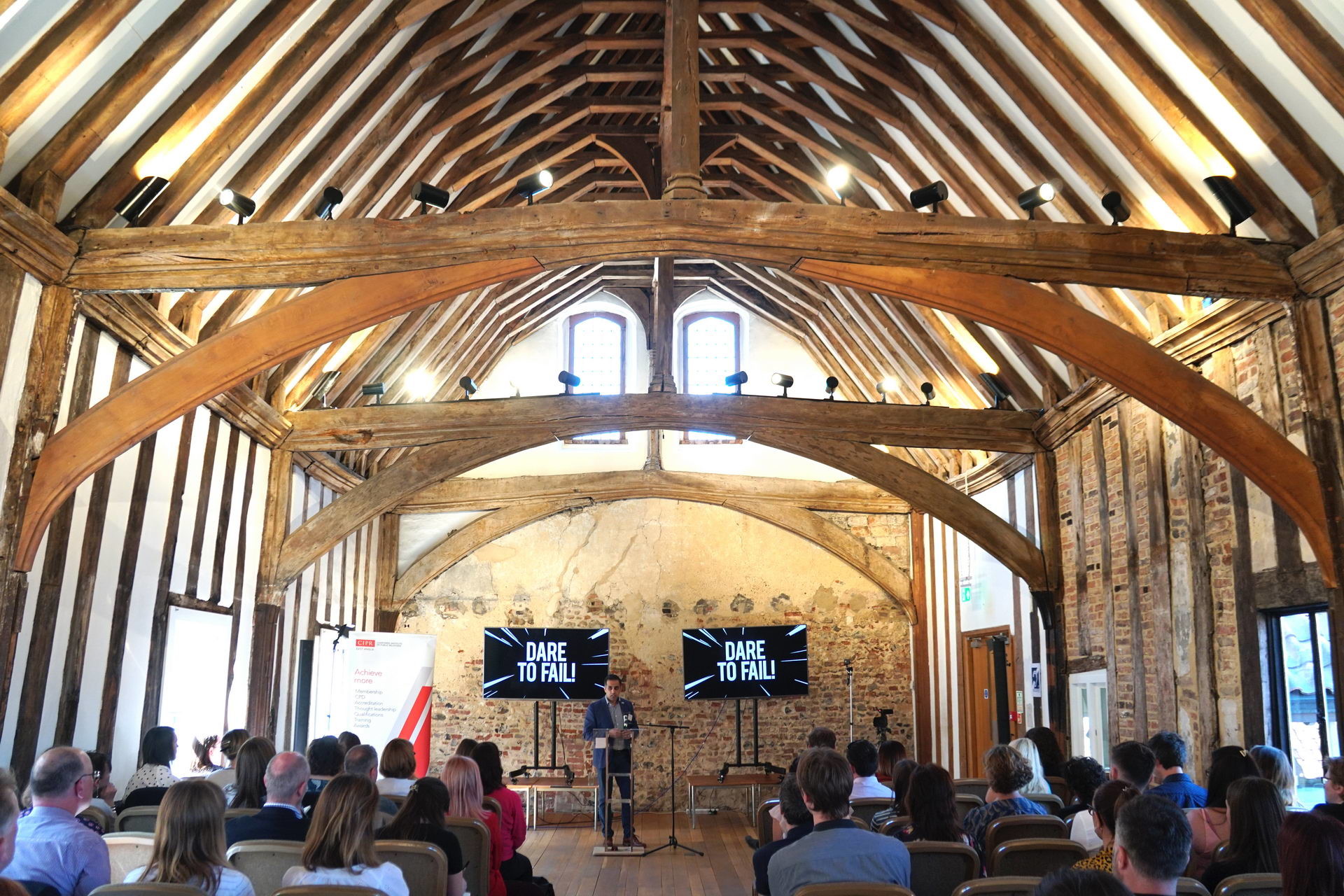
For me, hearing the no-holds-barred approach to professionalising communications from CIPR UK President Elect Jenni Field was really motivating – chiming with a lot of my own personal thoughts on the state of the PR industry at the moment. Looking forward to her getting stuck in soon.
Secondly, I was really pleased to hear Asif Choudry, founder of #CommsHero, give an inspirational talk about how we should ‘dare to fail’, take risks and celebrate our successes. Thanks for taking the time Asif, especially during Ramadan.
Practical takeaways
For me, living and working much of my time on social, Darren Caveney’s enlightening presentation on Supercharged Social Media was a highlight. Some great examples of organisations punching well above their weight, owning their topics and conversations.

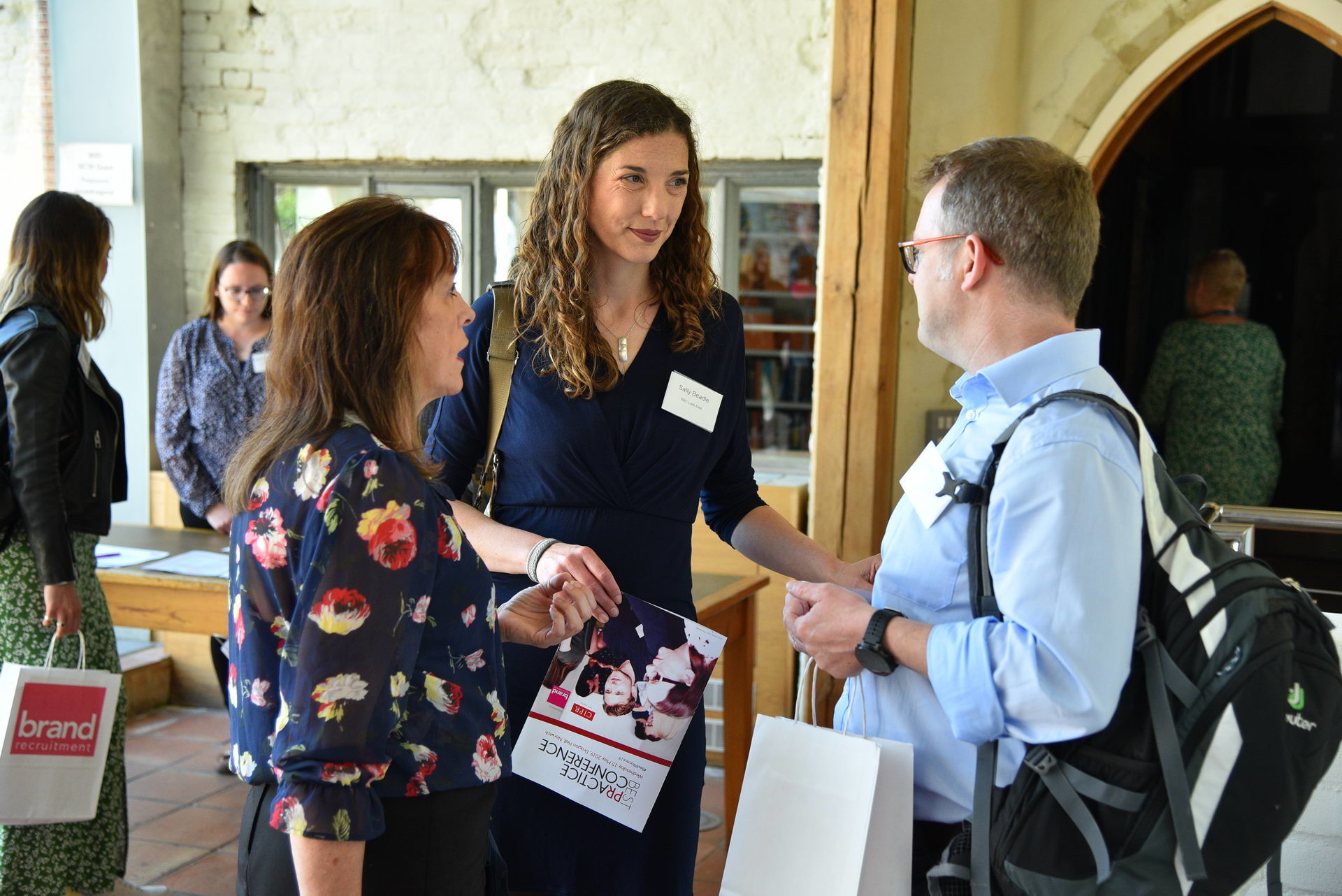
Other sessions I attended included Advita Patel’s in-depth look at communications for change (a very relevant topic for lots of us), influencer expert Harry Seaton, who walked an initially-wary audience through the value (and measurement) of influencing, Leanne Ehrenwith her superb take on mental health and wellbeing in the workplace, and Sally Beadle’s explanation of her evolving producer’s role at BBC Look East – which all went down well.
Faces to names (Twitter handles)
Too many people to name check individually, but I loved meeting so many people I’d connected with online, IRL.
Living in the East means that connecting and chatting with other comms folk is sometimes challenging. We make it work, however, and events like this are great or facilitating those conversations and prompting networking, ideas and (sometimes) a good moan. Us comms people have to stick together!
Look forward to seeing more of you at CIPR connect events in pubs around the region this summer.
Insight, foresight, more sight
DJ Shadow sums up my feelings on the conference there – we came, we learnt, we got inspired and we looked ahead. The future of our beloved industry is in a state of flux, but with proponents such as Jenni (direct, authentic leadership for her presidency) at the helm, I am very excited to continue my professional journey to become a chartered PR professional.
What next?
Onto the next event – check here for local meet ups near you, and sign up to Eventbrite to be kept in the loop for other events coming up soon (including a maximising LinkedIn session from yours truly later this year).
Originally appeared at https://ciprea.org

The £2,000 question...
A little piece from me on my experiences of asking for communications advice from different marketing and PR sources...
This year, while researching ideas for a possible future consultancy (pipedream, but you've got to start somewhere), I spoke to a few respected pro's for advice and a heads up on things I could, and should, look at.
You know, initial peer-to-peer advice and nudges in the right direction – NOT mentoring or coaching. Some people came back saying think about website domain first, others check relevant gov.uk sites, read this blog or consider savings before you start etc etc.
One particular marketing person, whom I respect a lot, came back saying "Yeah, I can help – that'll be £2k a day. Happy to help if you have budget..."
I was surprised and apologised if I missed something. I certainly did not have £2k lying around, and reiterated I only wanted utter top-line nudges or recommendations of where to look. They said they had to put a price to their time...
I was about to write "Needless to say, I have seen them in a different light", however, that isn't fair. This is a marketing (not comms) person, in a busy world, who – in their own words – paid people for this type of stuff when they started. They also told me to read their blog, which I do.
This saddens me in a way, that this person felt reluctant to give minimal sage advice for free, paying it forward and knowing (!) that karma has a way of coming back around (see kinda-related blog I did on this before).
I also understand the angle of 'Why would I help a potential competitor?' or 'Time is money' – true, yet some minimal advice before leaping to the £2k mark would have been appreciated.
I'm a member of both the CIPR and the IoIC, and feel both organisations are very open and symbiotic, even with possible competitors – sharing is caring and, in my opinion, the industry as a whole benefits from good souls!
I'd be really interested to see peoples' views on whether this was a shock, or understandable, or somewhere in between. Interesting for me as I am a huge proponent for giving others a helping hand and paying it forward.
Am I overreacting – is this something I should expect? Is this a situation others have come across, and all time should be charged? Or is this connecting with people for advice and support more relevant to the PR/internal comms world than marketing? Is there a limit to being kind for free?
Let me know your thoughts below...
It's good to talk
Been wanting to write this for a while, and #TimetoTalk Day seems appropriate. Please read and share, and let's break the stigma around #mentalhealth #wellbeing
First thing to say is that this is not a 'woe-is-me' post – I'm not looking for pity or sadness. I want to help break the stigma around mental health, and if this helps one person cope slightly better with their anxiety, depression or whatever challenges they may be facing, then I'll be happy.
Today is Time to Talk Day, an initiative from Mind and Rethink Mental Illness, backed by the government and National Lottery funding. One of the key lines is "However you do it, make a conversation about mental health". So, here's mine.
In 2010/11, I noticed I was having issues with my mental health and wellbeing. The trigger was originally work pressures (which I put on myself – no-one else saw any issues with the quality of my work, or how I was 'in myself'), resulting in being signed off sick and starting taking anti-depressants – SSRIs.
In the period since then, I've had a number of similar 'episodes' for a variety of reasons. 2017 was particularly rough as, unfortunately, I lost both my parents. Yet, the pressure I put on myself for work usually triggers my anxiety/depression.
I now see a counsellor regularly (I cannot recommend this enough) and also have my very own psychiatrist (how fancy). Last year, I was given a diagnosis of dysthymia – kind of helps having a name to it – changed the course of drugs I am on, and am speaking about what's happening to far more friends and family than ever before.
I have a chemical imbalance. That's it. It doesn't change who I am as a professional, as a friend, as a husband, as a father. It's simply part of me.
Furthermore, my work and colleagues have been particularly understanding, and are very flexible and supportive of me, helping me to stay well as I can. Thank you, CPL, for that.
So, there it is. I've been wanting to write something along these lines for a while. For me. But I also know that there are many peers, colleagues and friends who are going through similar and feel like they are alone. Please remember – YOU ARE NOT ALONE.
Take that first step to talk to a friend, or a stranger – even me! And try as much as you can to exercise – a brief walk can help boost those lovely endorphins.
Hopefully, this strikes a chord with at least one person, and can help them. Take a deep breath and speak to someone you trust about how you are feeling.
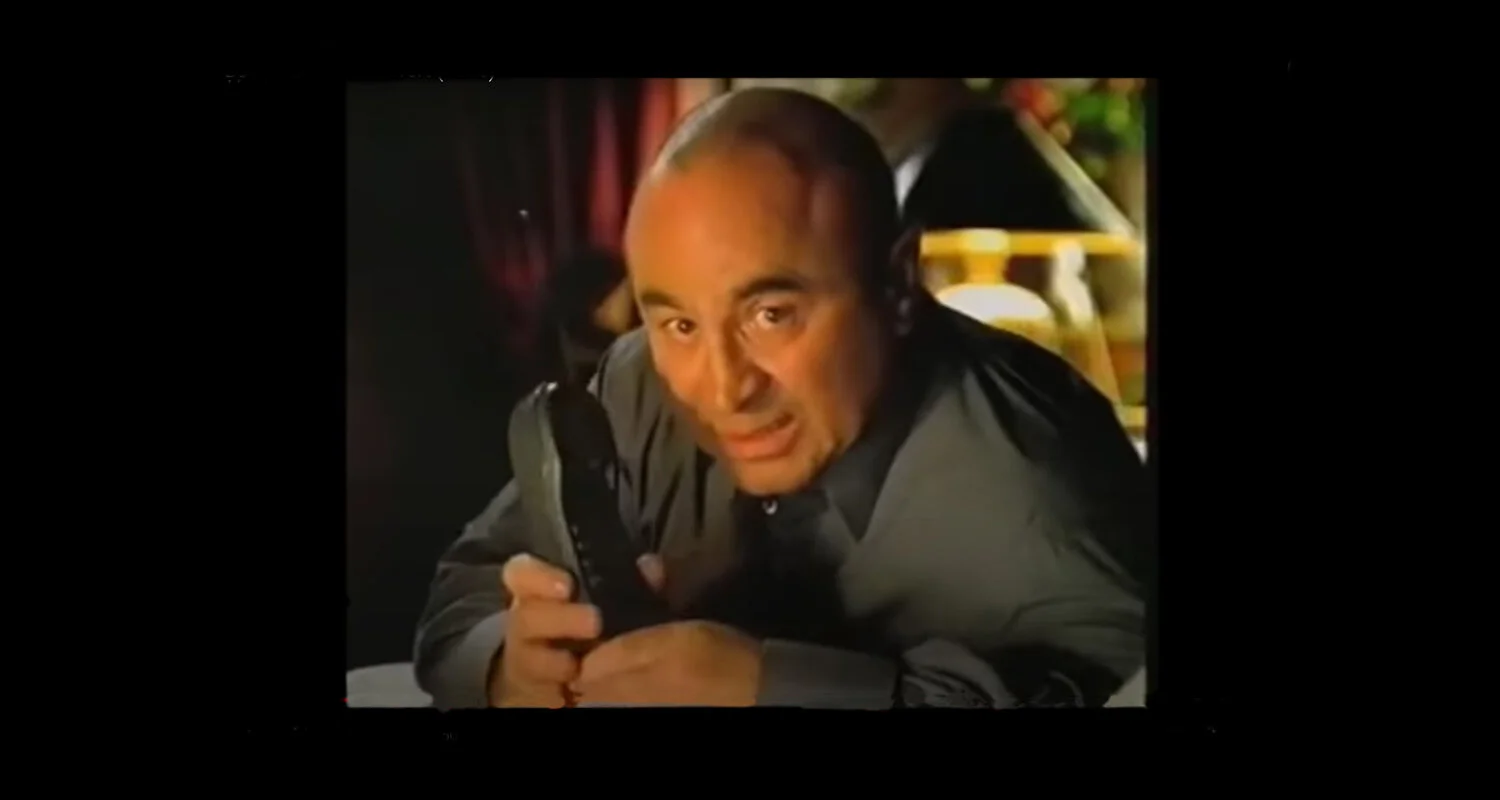
As Bob Hoskins said (ask your parents) – "It's good to talk".

The IoIC Awards | Raising the bar, and key learnings
A little piece from me about the great internal communications IOIC Awards 2018
This Friday, I'm heading down to London for the 2018 IOIC National Awards.
For the second year in a row, it's been my pleasure to judge for the IOIC, and I've learnt a lot along the way – from my fellow judges, as well as inspiration, quality of deliverables and pitfalls to avoid.
I've added a few key thoughts below, and look forward to seeing everyone at the black tie do. Shout if you want to say hello. I'm driving when I get back to Cambridge, so no dancing from me this year... (sorry, Justine!)
Raising the bar
The first thing to say is that the breadth and standard of work has been generally outstanding.
The combination of talents in-house and agency-side has improved since last year, and – in the same way that BBC dramas have been flying recently, Killing Eve/Bodyguard anyone?! – the end products have been superb.
From humorous to serious, the content has been engaging and impactful. There are some killer entries this year, and I'm excited to see who wins on the night.
What's the point?
"You wouldn't do it outside your company, so don't do it within."
No measurement, no award. Pretty straightforward.
If you put an entry in and do not have objectives ("What does good look like?") then the entry won't progress. The number of entries with no metrics associated to them at all, even anecdotal, was surprising.
Set clear KPIs, track activity and measure against your objectives.
The days of not measuring are gone. Time to wake up. You wouldn't do it outside your company, so don't do it within.
Who are you talking to?
Yes – colleagues, employees, us. The team. But people are people. Talk to them at a level that is appropriate.
Be transparent and honest (where suitable), use relevant language and don't try and be someone you're not. If the CEO/chair is wooden, think about someone else. Sense check things before you hire the film crew. Get opinions from key stakeholders and don't be afraid to adapt – or even kill – ideas.
If the message is complex, simplify it. If the message is simple, emphasise it.
Be engaging, authentic and true to your brand/company.
We should know the above points off by heart, but a small fraction of the unsuccessful nominations were (frankly) embarrassing, considering the experience of the companies and comms-people involved.
That said, this Friday's event will be great – the country's best and brightest internal communicators 'locked' in a room with booze, food, music and some raucous, deserved applause. I can't wait.
See you there.

Brewery 'buy-outs'? It's just business.
Fourpure Brewery sells to Australia's Lion. My thoughts on the UK brewing scene and how we should keep grounded when talking about 'our beer' & 'selling out'.
Another day, another British success story.
This time around it's Fourpure – one of the Bermondsey Beer Mile crew. Yesterday, they announced becoming part of Australia's second largest brewing company, Lion.
More information here, courtesy of beertoday.
They've joined the long list of British breweries growing their business/partnering with a bigger distributor/selling out to the devil (depending on who you speak to)... Below are some of them, as a reminder that this is not a new occurrence:
2011 – Sharps (Doom Bar) sold to Molson Coors and ABI bought Goose Island (still a great range of beers!);
May 2015 – Meantime sold to SAB Miller, subsequently to AB InBev, then onto Asahi to stop ABI breaching competition rules;
Dec 2015 – Camden sold to AB InBev;
July 2017 – London Fields (God, remember him?!) to Carlsberg;
Oct 2017 – Charlie Wells to Marstons;
Nov 2017 – Heineken acquires minority stake in Brixton Brewery; and
June 2018 – just last month, Beavertown took the plunge with Heineken too.
"I'd put it in the same bracket as your favourite band splitting up (the tears, the anger, the acceptance...)"
Yes, there is an argument about the 'craft' movement and, yes, we all do get a little emotional over beer – I'd put it in the same bracket as your favourite band splitting up (the tears, the anger, the acceptance...) – but we must keep a clear head.
This is business. Pure and simple. These guys have gone into it to make a successful, money-making career. SPOILER ALERT – they don't do it purely for shits and giggles.
Stability and growth are important in paying for a house, car, food, clothes and providing for a family. Furthermore, these founders (and their colleagues) can still love what they do, have passion for it, and – importantly – still make great beer.
Something that's usually forgotten in the mêlée are the hardworking, real people behind these brands. Those who cycle into work. Those who are making ends meet. Those who are supporting relatives and loved ones. And those who aren't. Oh, and those who run the social media accounts, too!
I'm all up for supporting independents, and those starting out but – at the end of the day – the goal should be the same. Have fun, do something you love, make some money, make some memories, and enjoy life.
So please, Internet (yes, I'm looking at a certain 'forum' on Facebook), take a moment before launching into a diatribe about 'your' beer and selling out. We're all in this crazy world of work for the important things – family, friends and happiness. Don't be a grinch.