
BLOG
Brands during COVID-19: who ‘got it’ & who missed the mark
Coronavirus Marketing & Communications | Click here to read about how brands and organisations handled themselves during COVID-19 – good examples of advertising, PR & comms during the UK Covid-19 epidemic, and how some company decisions missed the mark. Purpose-driven branding wins vs companies forgetting employees.
The ethical concept of being right or wrong is one I shall not be delving into – it’s a branch of philosophy reliably left to Socrates and co.
However, something being good or bad is more nuanced and individualistic – something we’re empowered to have; our own opinions.
In addition to the changing Government comms, branding and business communication is particularly under the spotlight for showcasing a lack of authenticity and for undertaking purpose-, ethic- or value-washing.
This started as a drafted list of ‘winners and losers’, but given the harsh contextual realities of the global pandemic, and mounting economic tsunami, I thought a change of tack would be welcome.
So, what were the brands that have got it ‘right’ and ‘wrong’ during the pandemic?
Creative coronavirus comms
I thought I’d start by highlighting some of the good work done by marketers, communicators and businesses across brand marketing in the past few months. Those who got it more right than others. In no particular order:
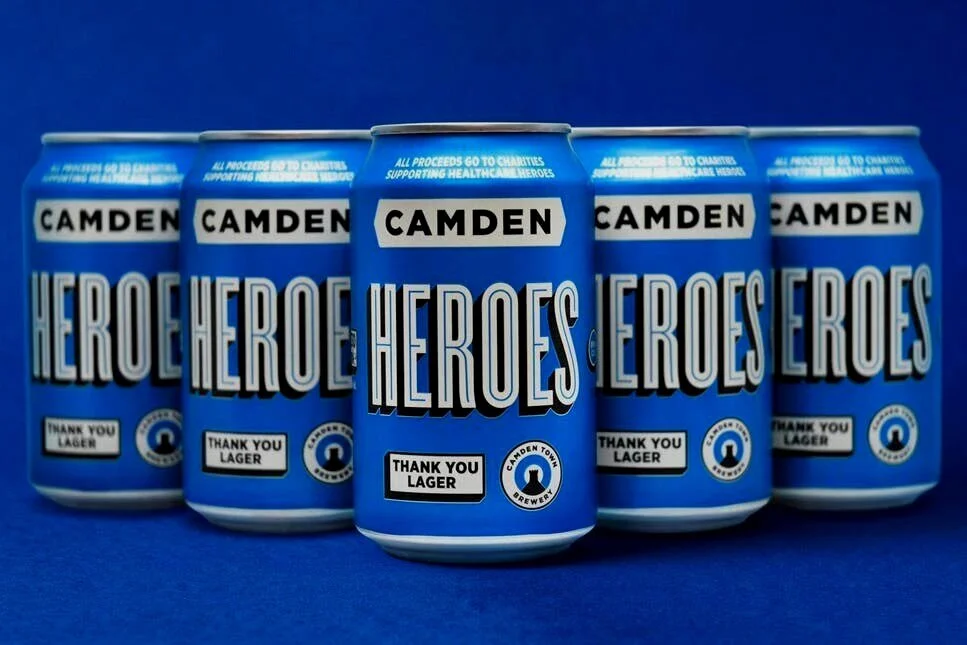
North London’s Camden Town brewery rebranded its popular Camden Hells lager as ‘Camden Heroes’, giving away a six-pack of the beer to every NHS worker as a thank you.

In the same vein, many businesses volunteered their time, products and services to give back to the NHS, including Pret giving free hot drinks and 50% off food, breweries including Brewdog producing hand sanitiser (although it needed more alcohol), and a regional pub group donating meals to NHS, carers and frontline workers.
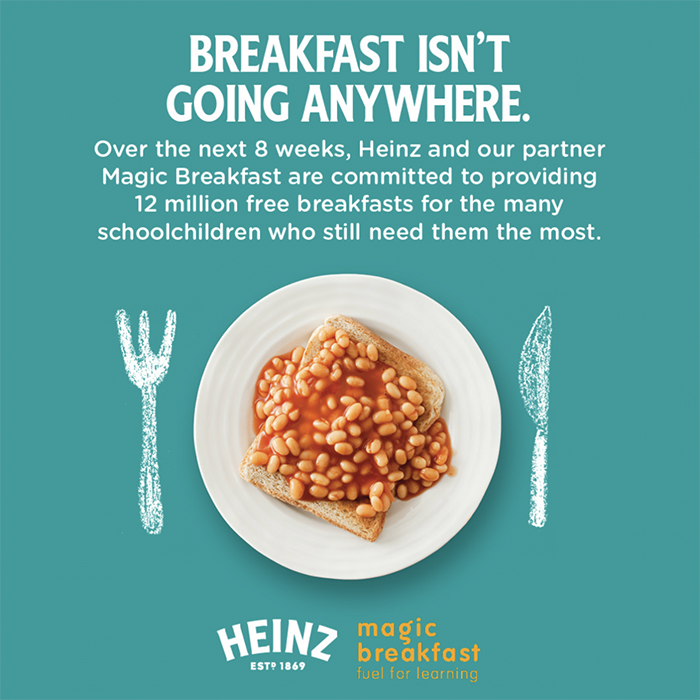
Heinz took a similar route with its ‘breakfast isn’t going anywhere’ campaign – partnering with Magic Breakfast to donate 12 million free breakfasts to schoolchildren who needed it the most. Precursor to Marcus Rashford’s strong work (or is it ‘Daniel’?).
Explaining coronavirus and why we’re in lockdown to children can be a struggle. Creators of ‘The Gruffalo’ Julia Donaldson and Axel Scheffler created 12 illustrations featuring a range of characters, including Stick Man and Zog, to help children understand the importance of social distancing.

This was also the approach by some larger brands who adapted their logo for impact, however, they were chastised by some for being a short-term PR stunt. However, food for thought that clever ideas don’t have to be big changes.

More light-hearted campaigns that caught my eye were Lego’s take on the video call – relevant for work as well as keeping in touch with friends and family – Ikea Spain’s reminder of the importance of staying home with a TV ad and clever poster campaign, and the Budweiser ‘Whassup’ redux reminding people to check in on friends in isolation.
Hotels.com also did well, pulling the plug on it’s big campaign featuring Captain Obvious squashed up in a plane, with hands in snacks, for a new, social-distancing piece. A U-turn that was probably a good idea, given that consumers were having to cancel holiday plans for the foreseeable future, avoid flying and stay 6ft away from people...
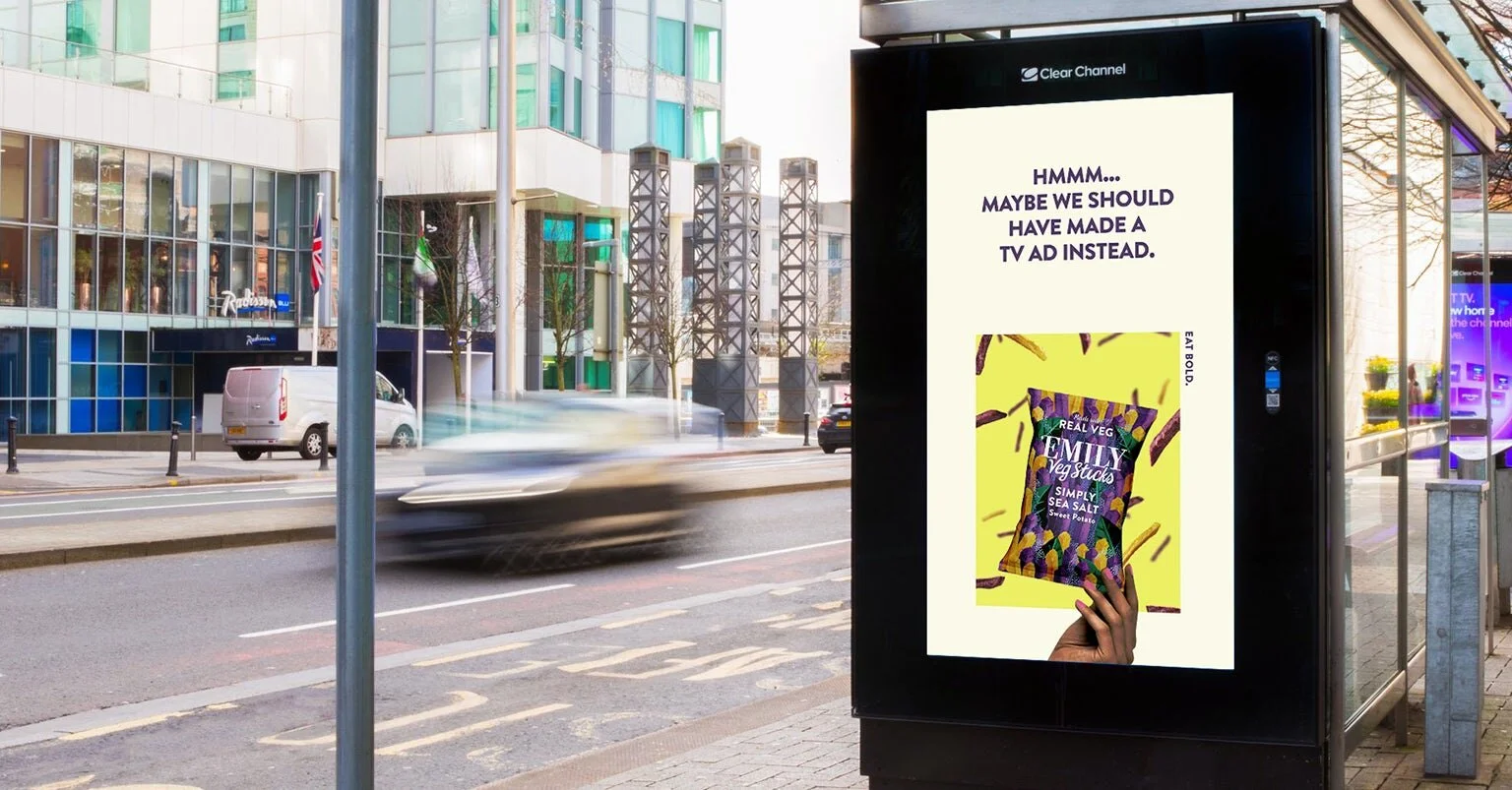
And finally, snack brand Emily capitalised on its first ever out-of-home (OOH) ad campaign that was already paid for, by adapting the messaging to ensure it was picked up in other media, such as social. Very clever and, as the brand believes, it will have more cut through from it’s impact: “...this is going to have a lot less eyeballs…[but] because it’s so relevant and it’s of the moment… people want a bit of humour right now and that’s what will allow this campaign to resonate.”
Marketing that missed the mark
So, we’ve looked at creativity in coronavirus communications, and now here is the other side of the coin – those who have not quite got their proposition ‘right’.
In the current climate, there is a likelihood for opportunistic behaviour to make a fast buck. However, not considering how your brand’s behaviour and outputs may be perceived is a huge risk.
In such a visible, opinionated (polarised?) world, putting profit, sales or perceived vanity metrics – such as social reach – ahead of brand values and longer-term positioning is rarely a good thing.
Continuing along the advertising route, the decision to not pull potentially-sensitive ads can be an issue. For example, see Norweigian Cruise Lines’ choice to carry on with a huge campaign which included upbeat cruise ads placed during a CNN show segment about thousands isolated on a cruise ship due to coronavirus. Sometimes it’s worth taking a hit. Was there a possibility to change the messaging? Maybe.

Norweigian Cruise Lines’ messages caught peoples’ attention, maybe not for the right reasons…
Also over the pond, American cleaning brand Lysol took a hit when its upbeat cleaning adverts struck multiple nerves at a time when hygiene felt like a matter of life and death. Many products were out of stock during lockdown, and some people felt the tone and timing of the ads was in poor taste.
Kudos where it's due – the team at KFC UK realised the potential PR issues and paused ads about being ‘finger-licking good’. Albeit, after c.150 complaints.

'Finger-lickin' good'? 163 people complained about KFC's campaign / KFC / The Drum
Moving onto a different type of risk, insurers have been in hot water over refusals to pay out to businesses affected by coronavirus. Hiscox, RSA and Zurich are three of eight insurance companies being taken to court over refusal to pay out to cover disruption from a “notifiable disease”, based on wording of the policies. Read more in this piece from the Financial Times.
Next up, the aptly-nicknamed ‘d*ck list’. The UK Businesses Coronavirus Response for Workers spreadsheet was created back in March by PhD social scientist Catherine Oliver, who originally meant it to be shared with friends. She was “furious” at how the pandemic “[reveals] the deep inequalities in society that we've known for a long time.”
The list detailed companies that had allegedly not treated employees fairly, or acted in a less than understanding manner. For clarity, I realise situations are very complicated – my point is how you treat and communicate with colleagues and suppliers is (rightly) becoming as important as how you treat your consumers.
Among those making the list were:
Richard Branson (worth around $4bn) called for a government bailout for Virgin Atlantic, while asking employees to take unpaid leave;
Wetherspoons was condemned for not closing during the outbreak, and later for telling workers they wouldn't be paid until the government's furlough cover was in place; and
JD Sports was also chastised for keeping its warehouse open, even though social distancing wasn’t possible, and giving a £100 ‘bonus’ for working.

Tim Martin, chairman of Wetherspoons
Would being a ‘better’ company make a difference in the long-term? Who knows, but the risk of purpose-washing and not caring about your colleagues’ health can be a damaging one – internally with employee engagement, but also being seen to not live up to one’s inclusive brand values and purpose.
As The Vice piece says, “when we return to normal, non-pandemic times, it may be useful to know which companies you should support and which ones you should swerve.”
The external view of companies can (and should?) be massively affected by internal goings-on, as whistleblowers, social shares of all-staff emails and my personal favourite – the ‘disgruntled employee’ – goes to show.

On that point, if you do have a social media team, make sure they are onside – May’s “truth twisters” tweet from the @UKcivilservice shone the light on how important this is. My golden rule: don’t do anything internally that you wouldn’t be happy with sharing externally.
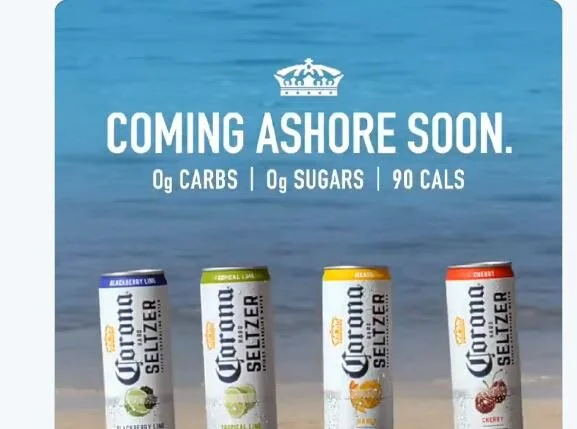
Finally, it wouldn't be a pandemic blog without mentioning the eponymous beer brand (Corona Extra, to give it its full name). Yes, it is very hard to predict that your brand may be associated with a deadly airborne virus, and sales were hit, but maybe it would’ve been wise to postpone launching the brand extension Corona Hard Seltzer…
As brands, businesses and organisations move from survival to recovery, it is important to retain the awareness of what is, and what is not, the ‘right’ moves to make. Keep in mind how this could be perceived by your stakeholders, colleagues and consumers, remembering always-on consumers increasingly consider a company’s actions before making a decision. So, try not to act like a ‘d*ck’.
This two-part blog was originally written for the Trajectory Partnership.

Going back to work: ditching the office is not the ‘new normal’ for everyone
The Coronavirus Job Retention Scheme (CJRS) is now closed to new applicants. For the millions of workers who have been on furlough since March this represents the start of getting back to work. But what will work look like after lockdown?
Tom Johnson is Managing Director of Trajectory, a leading trends and foresight consultancy. Tom and Trajectory use data and forecasting techniques to understand changing consumer behaviour and map out the future.

Last week, the Coronavirus Job Retention Scheme (CJRS) closed to new applicants as the Treasury starts to taper the support given during the lockdown. For the millions of workers who have been on furlough at some point since March this represents the start of getting back to work.
But what will work look like? For many people – myself included – the way we work has changed. I have gone from working full time, usually in an office, but just as often travelling around the country to working entirely at home. Meetings, presentations and research interviews now take place via Zoom – or whatever platform the client prefers – and I haven’t travelled anywhere for work, or seen a colleague face to face, since the middle of March.
This is a pretty common experience for people in service economy jobs, and especially for those in higher social grades – A, B and C1. These are the office jobs that can be fairly easily transplanted into an office-less world. Many other jobs – in particular, many jobs performed by people in lower (C2, D and E) social grades – cannot. This means that the future of work looks very different by socio-economic sector.
How has work changed since the lockdown started?
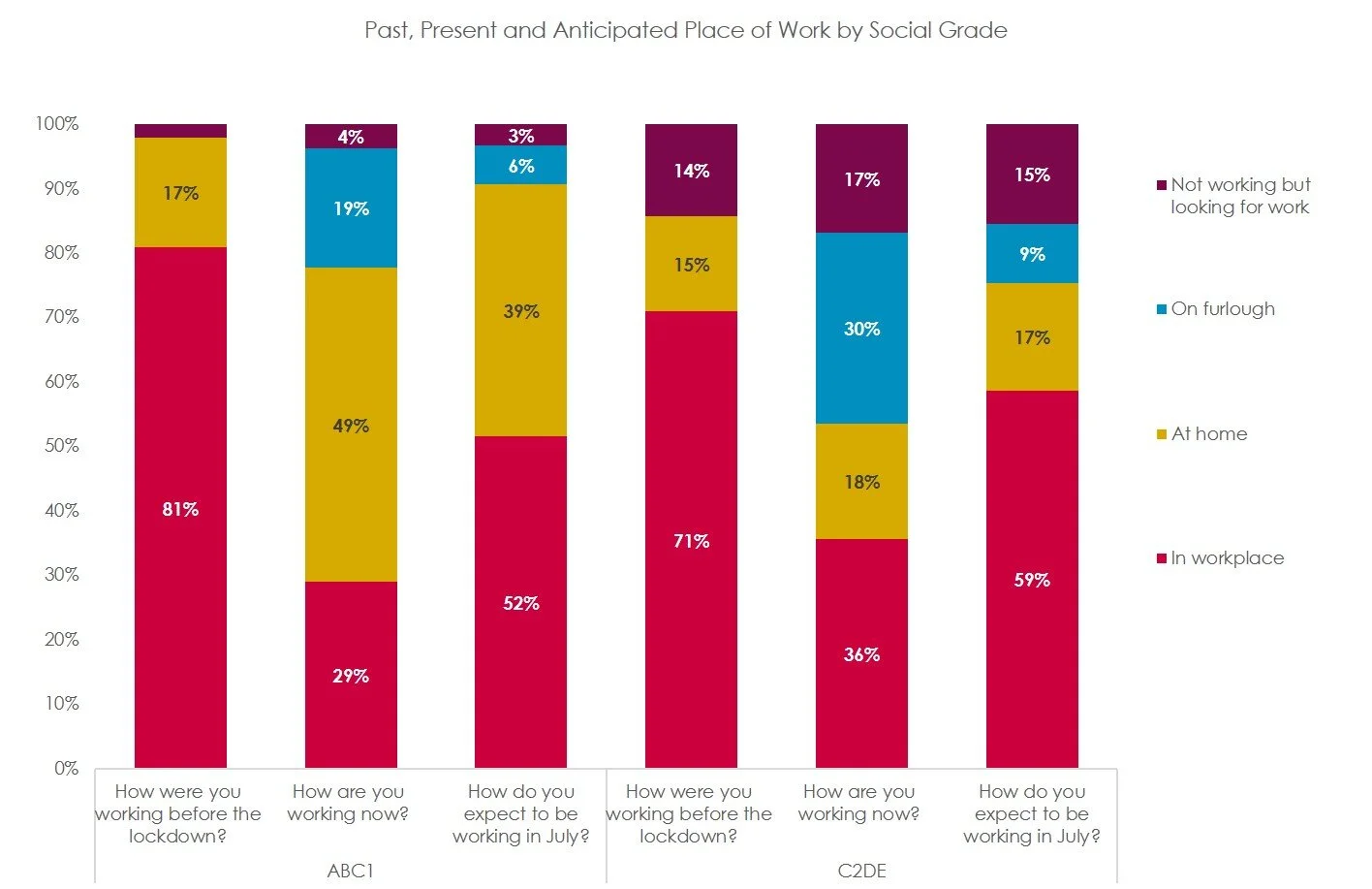
We get a good picture of the recent shifts and likely future developments from our recent consumer survey. Overall, 37% of workers were working from home in May – more than twice as many as usually do. At the same time, 32% were still working in their place of work and 23% were on furlough. But expectations for the months ahead are very different. More than half of those on furlough in May expect to be back in their workplaces in July, but the majority of those that have been working from home in recent months expect to still be at home over the next couple of months. We’re not all going back to work – some of us are going to stay where we are.
The chart below reveals how this breaks down by social grade:
Source: Trajectory Optimism Index, May 2020
Put simply, the big change for ABC1 workers over the past few months has been to shift to working at home and most of those currently working at home will continue to do so. For C2DEs, however, the big shift has been going on furlough, and soon, coming off, furlough.
What does this mean?
In the immediate short term, more office-based jobs will continue to be done away from the office – the workplace will cease to exist in the traditional sense. For other jobs, the workplace will change: more PPE, screens, social distancing rules and shift work will change the nature and timing of work – but it will still happen in the place it used to.
These adaptations are designed to minimise risk, but they cannot eradicate it completely. In the working age population as a whole the mortality rate for Covid-19 is 9.9 for men and 5.2 for women (that means out of every 100,000 men aged between 20 and 64 in the UK, 9.9 will die of Covid-19). For professional occupations – which includes many office jobs and jobs in the ABC1 bracket – this falls to 5.4 for men and 4.2 for women. For lower skilled elementary professions – jobs in the DE bracket – this rises, to 6.1 for women and 21.4 for men. Coronavirus may not discriminate, but the social economic context absolutely does.
In the longer term the pandemic will accelerate automation. In ordinary circumstances, this would happen relatively slowly – allowing for new jobs to be created by technology, as always happens – and would affect routine jobs both in higher and lower social grades. But an accelerated timetable and a particular focus on automating those jobs – in retail, delivery, transport and manufacturing – that most depend on humans currently will disproportionately affect lower social grades.
Working from home is a challenge for many people: but going back to work, especially for those in the C2DE bracket is fraught with much greater dangers in both the short and the long term. While many of us have ditched the office for good – and some us will even be enjoying that – the reality for millions of others is very different.
This article first appeared on Trajectory's subscription portal, Signal. Click here to find out more about Trajectory and to sign up for their (free) newsletter.

Insight from #CoronaCon Part One
Reviewing CoronaCon Part One, a special CIPR event to discuss & address the issues public relations and comms professionals are continuing to deal with during the coronavirus pandemic, and what the future holds for our PR industry.
Yesterday, I took time out of my hectic new business schedule (!) to attend an event that intrigued me.
CoronaCon was set up by the CIPR Greater London Group to "address the issues public relations practitioners have faced, and are continuing to deal with, during the coronavirus pandemic, and what the future holds."
Not just an impressive line-up of speakers, it was for a good cause too. Proceeds from the event went to iProvision – the benevolent fund of the CIPR for more than 50 years (as the event says, "its services are needed now more than ever") – and The Felix Project – one of London’s three biggest food redistribution charities, providing emergency response services for the capital.
Speakers and takeaways
The speaker line-up was pretty impressive (the main thing that caught my eye about the event), and below I've laid out a couple of my key takeaways per presenter:
Diane Hinds – a Greater London Group committee member, Diane also has sickle cell disease. The arts and entertainment PR explained about the added cost (financially and emotionally) that the pandemic has caused her. Thank you for sharing your story, Diane.
Jenni Field – the President of the CIPR ("El Presidenté" as Darryl says!), and founder of Redefining Comms, spoke eloquently about how our industry's reaction to coronavirus has been, and how Board leadership and mentoring opportunities are also key. She underlined the importance of having a heightened awareness of the sheer volume of information out there, and our duty to get the right information to the right people.
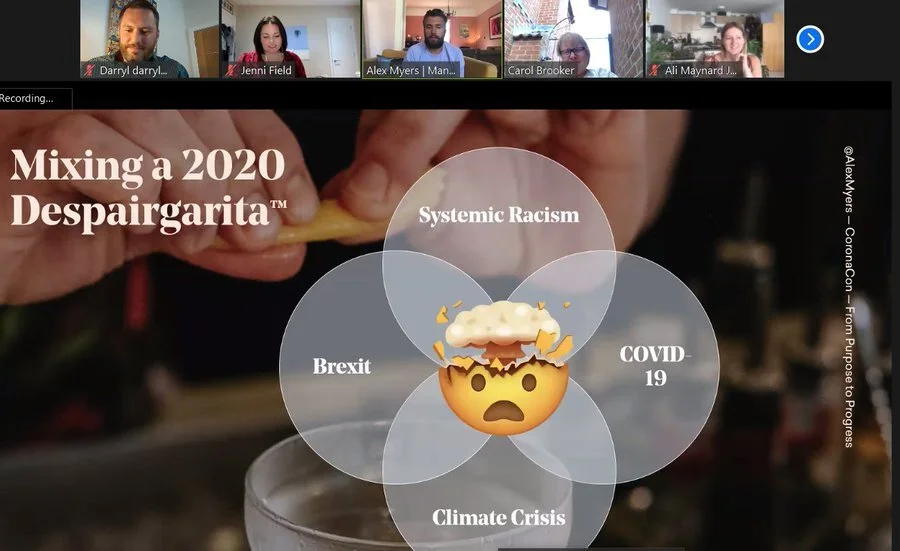
Alex Myers – founder and CEO of Manifest Group and PR Week's Global PR Professional of the Year 2020. From Yorkshire, no BS, bit sweary. I like. Top stats, good humour and honesty about how things will change. Key points: coining "Despairgarita", the cocktail of concerns that consumers have in a post-COVID19 world, and the evolution of brand expectation, in regards to purpose.
"As long as you're pissing the right people off", you're doing OK – don't be vanilla, middle of the road | Alex Myers
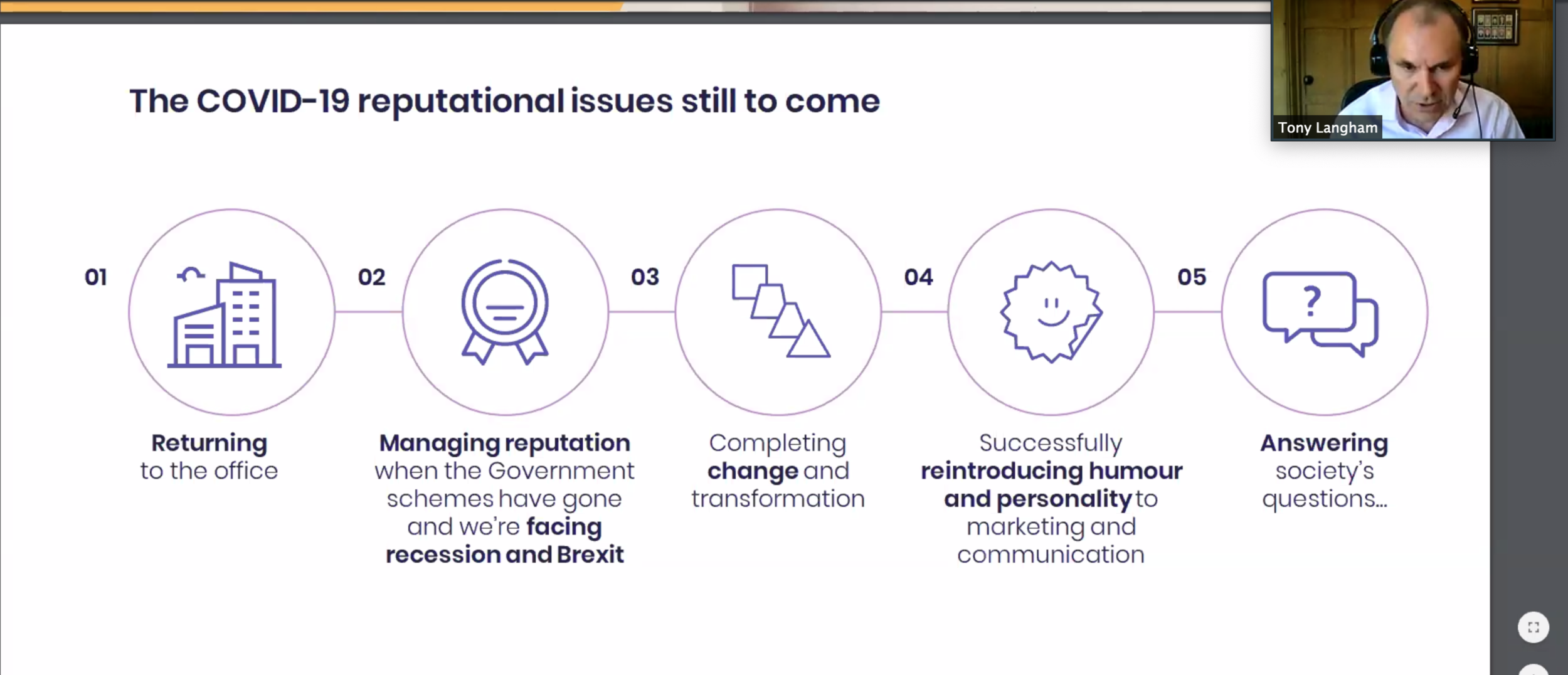
Tony Langham – co-founder and CEO of Lansons. Presentation called "It's all about reputation now". Sharing great advice and insight from his many years at the top of the game – highlighting great work from local heroes, and flagging big companies, that have done 'well' so far, need to keep it up. Businesses need to share deeds AND words on the big topics, and there is more to come:
Natalie Orringe – CMO of Access Intelligence Group presented "Insights from the Vuelio Barometer of Comms Leaders". Great stats – as you would expect – from hundreds of comms pros over a long period, looking at evolving trends since Q4 LY. She points out it is now all about recovery.
(THIS NEXT ONE WAS PRETTY INSPIRATIONAL)
Polly Cziok – speaking about her experiences as Director of Communications, Culture and Engagement at Hackney Council during the Covid Crisis, Polly was honest, direct and a superb speaker about comms in general. An awesome presentation on local government's response to the crisis on a local level, she represented #localgov comms – and the world of PR – in a superb way. Basically, #PollyforPM.
"Wherever you find trouble, you will find a local government comms team working 24/7" – Polly Cziok (via tweet from Kate Vogelsang @Kate_bob)
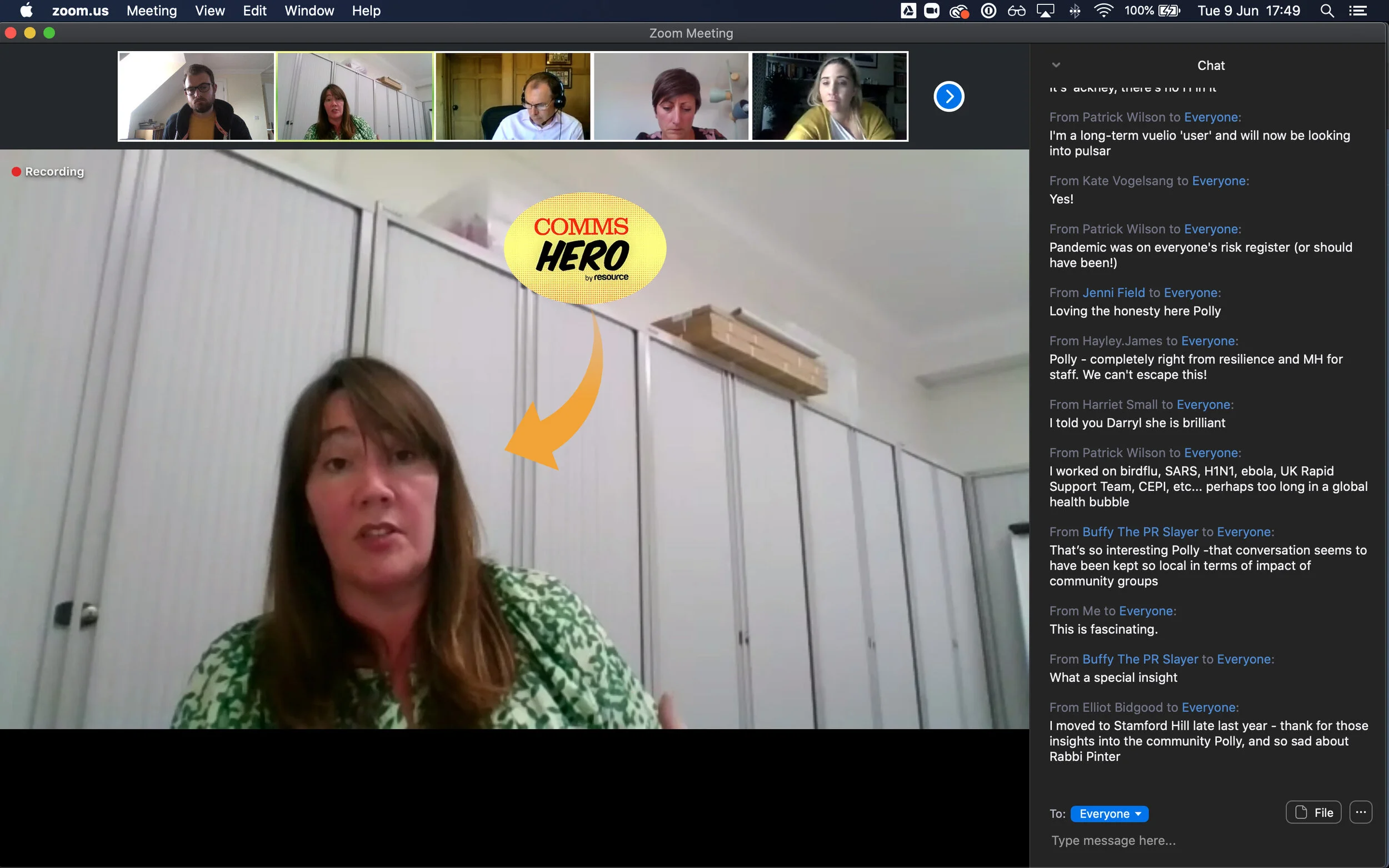
Check out more of the shared insight on Twitter – where else – through the hashtag #CoronaCon. And try not to respond to the people who have got the wrong end of the stick about Coronavirus itself being a con... *facepalm*
Thanks to the whole CIPR GLG group, especially Darryl Sparey for MC-ing, throwing in some hard-hitting questions and occasionally being on mute, and Nicola Brown for recommending the event and leading on the socials.
CoronaCon Part Two is on 16th June (next Tuesday) and – if yesterday's event is anything to go by – it should be one to not miss.
Also worth a read, Kate Vogelsang’s blog post on #CoronaCon – how PR has done it’s thing (Birdsong Consultancy).

"You've got (another) mail"
Ineffective email marketing | Email’s ROI is huge. But many digital campaigns fall at the first hurdle by blasting e-shots to everyone with no emailing strategy, personalisation, segmentation or integration. Read how Authentic can help you with your email marketing.
How to not do email marketing – mass blast outs, no personalisation or segmentation, and mailshots not integrated with other outbound & inbound marketing efforts.
Certain companies seem to have a shotgun approach when it comes to emailing potential customers. An approach that won’t get you more business, but will introduce you to a new group – the ‘unsubscribers’.
At some point I have signed up to an email database to make, or consider making, a purchase on a couple of websites. After clearing my personal inbox recently, I discovered I’d been receiving c.4-5 emails per week from two businesses alone:

Too many emails, Blurb.
Blurb – online photobooks
Signed up to this a few years back, as wanted to create a holiday photobook, which I obviously haven’t yet done (can anyone else relate?). Since then, I’ve regularly been receiving 4-5 offers PER WEEK with no interaction.
La Senza – womens’ underwear
Something comfy (not kinky) for the wife’s birthday last month – calm down. Have received seven emails since 21 May… that’s seven in 11 days. Overkill?
Isn’t email dead?
In a word, no. Discount email at your peril. Hubspot’s latest global survey (late 2019), said that “78% of marketers have seen an increase in email engagement over the last 12 months”.
Furthermore, the same report saw that the return on investment (ROI) of email marketing sitting at around $40-$50 back from every $1 spent, more than any other channel.
This 2018 report from Campaign Monitor also has 55% of marketing professionals seeing the best ROI from email campaigns, far out performing social or display ads.
Why? It’s people already with some element of interest in your product or service. They have already started on their journey through your marketing funnel. They are aware of you. Keep them engaged.
It’s not spam

Spam is unsolicited email, possibly purchased from an email list, or an affiliated business – remember those tick boxes before signing up to something?
Oh, and a word of caution – NEVER buy an email marketing list. Apart from being unethical and borderline illegal (GDPR), it can damage your brand by inundating customers with products or services they have no need or desire for.
Personalisation, segmentation, integration

Campaign Monitor integration advice – click above to read more.
The future is certainly heading in this direction. An email database is a powerful thing, but when you link it up to other marketing channels – such as EPOS, sales data, your website or a CRM (customer relationship management tool) – you can truly reap the benefits. Campaign Monitor has a good article on integrated email marketing here.
Mailchimp is another go-to in the email marketing world, taking the heavy lifting off companies, and providing useful, effective and easy-to-use tools for marketers to extend reach and build engagement. See this interesting article on the power of personalisation (or personalization, for Americans) to get some food for thought.
Also, I’d thoroughly recommend checking out Mailchimp’s strategic hints and tips for further insight.
So, what are your thoughts on effective customer emails? Which companies do you think do email marketing well, and what are the emails that make you roll your eyes or unsubscribe? Sharing is caring.
Post below or get in touch to see how Authentic can help your business make the most out of email marketing.
Main photo by Torsten Dettlaff from Pexels

Why media training shouldn't be sniffed at
When you’re on live TV announcing the biggest job losses in your company in years, it’s not the best idea to smirk or interact with someone off-camera…
When you’re on live TV announcing your company’s biggest job losses in years, it’s not the best idea to smirk or interact with someone off-camera.
Yesterday, it appeared Warren East of Rolls Royce did just that.
CEO of the Derby-based company since 2015, East was being interviewed by the BBC’s Victoria Derbyshire about the potential 9,000 job losses in its civil aerospace division. Midway through, he repeatedly glanced away from the camera (laptop) to look at and communicate with someone else in the room.
Watch the video below, courtesy of The Metro and BBC News (click twice to play).

Some comments on Twitter yesterday were on the side of arrogance – this is a man not in touch with the gravity of the situation for thousands of his employees – while others said it was careless to be distracted whilst being interviewed. I won’t delve into the other, less-polite mentions.
(Thanks to CEO publicist Nina Sawetz for flagging up the clip. In addition to the smirk, she rightly points out “don’t have someone distracting you“ during a live interview. Pretty basic, no?)
A few media interview tips:
Practice makes perfect – like crisis comms, practise challenging interviews (helpful if the journalist is someone external to the business, to sharpen the experience);
Non-verbal communication – body language, how you hold your hands, facial expressions, where you look and smiling at inappropriate times are all important;
Talk in (some) soundbites – keep the main phrases you want across front of mind. Be conscious of overkill – i.e. ‘strong and stable leadership’ – so find a balance of having key ‘soundbites’ already rehearsed in your head;
Give yourself time – rephrase the question back to the interviewer, and don’t forget to breathe. Go at your pace and try not to match the interviewer’s tone or pitch. This isn’t a competition;
Be yourself – Yes, you are representing the business or organisation, but talking like a robot will not be appreciated. Be personable, authentic and empathetic, if possible. This may be challenging for some, but is why media training is there.
The evolution of comms
In recent years, communications has had more influence within the c-suite. Businesses, brands and their stakeholders are coming around to it being more than ‘mwah-mwah’ PR schmooze and newspaper cuttings.
Investing in well-rehearsed media training – along with other key skills such as crisis comms and brand personality – is part of the journey of communications’ strategic role, with measurable results and demonstrable impact.
However, it’s not just for CEOs. Anyone likely to be a spokesperson for your brand, business, organisation or community should have a decent understanding of how they speak and act on camera, on radio or during live events can have real impact – causing financial as well as repetitional damage (see more examples below).
Media skills training helps prepare these individuals to get their organisation’s key messages and values across in a variety of media opportunities, ensuring they’re as prepared as they can be for tough questions, unexpected revelations and the subsequent media coverage.
More ‘great’ examples of missing media training:
Remember the mic is on – Gordon Brown’s “bigoted woman” and “We’re in the money” by the Sainsburys CEO.
Think before you tweet – wiping $13bn off your company’s share price. Musk did similar in 2018, resulting in him stepping down as Tesla chairman, but remaining as CEO.
Don’t bring it back to you – BP CEO: “I want my life back” after 11 deaths at the Deepwater Horizon oil spill.
What do you think?
Is media training overrated? Should CEOs know better? Have you had a ‘challenging’ media experience with a key stakeholder? Please keep the circumstances anonymous if you are sharing, or contact me directly. I’d love to hear more.
Image credit: https://unsplash.com/@sammcghee

Six tips to help you start blogging
How to start blogging | Want to write a blog? Don’t know where to start? Try these pieces of advice to get you in the mind-frame to begin writing a blog, including ideas, content, SEO and audience. And, remember, it’s got to be Authentic!
“How do I start a blog?” is a question I’ve been asked a few times recently, so thought it worth putting the tips I’ve shared into a blog post. Hopefully, these will help you get started.
Before getting into the tips, it’s worth – as with every piece of marketing and communication – being really clear about the reason behind it (the objective). For instance:
Are you writing to express yourself creatively?
Are you trying to increase your awareness, and subsequent leads, for a business, brand or organisation?
Are you working on your personal brand? (more on this in a future blog)
Do you want it to start conversations in a community, or within a particular audience?
Or do you want to be considered a thought-leader in a specific area?
Whatever the reason, keeping it front of mind before starting (and when writing every new piece) is very helpful in remaining focused.
“It doesn’t need to be perfect… it just needs to be published”
Here are the tips:
One – Forget word count.
Don’t be hindered by the difference between 300 and 500 words. Great blogs can be anything from 200 to 1,500. Depends on audience, topic, detail, purpose etc. Write until it feels right.
Two – Take notes.
Ideas come from anywhere. Become your stream of consciousness – if you think it, write it down. More than likely others are wondering about it too, so go with it.
Jot down thoughts, murmurings or questions whenever they come to you – toilet, shower, before bed, watching TV, out for a walk. You could use notes on your phone, a notepad by the bedside, or voice recording (recommend Otter.ai, especially if you’re driving).
Three – Speak to one person.
Imagine you’re in a pub (remember those?) and you’re talking one-on-one to a friend. Give them them your ‘elevator pitch’ – a clear, concise explanation, so anyone could understand it.
What would you want them to remember from your conversation – the one takeaway? Focus on that. Wider thoughts can be built into another blog.
Four – Give it time.
Like Rome, blogs aren’t built in a day. Write something. Leave it for a bit. Go for a walk. Sleep on it.
Go back (across a few sittings if needed) and wrap it up. Cut out filler words and phrases, and fluffy descriptors. Try and say it with fewer words.
A great quote from the below Yoast link to keep in mind too:“It doesn’t have to be perfect; it just has to be published.”
Five – content over SEO.
SEO (Search Engine Optimisation) is increasingly important – again, more in another post soon – but don’t worry so much. A great idea and reasoned thoughts will have as much impact as SEO, if not more, depending on your audience and objectives. Check out these SEO basics from Neil Patel or ahrefs.
Six – Amplify.
Sharing’s caring. Post the link and brief context on social platforms, or send an email/WhatsApp. Lean on colleagues, peers and advocates to help you get the word out. A blog needs to be read.
These tips are by no means all you need, but should help start breaking through writer’s block.
And – of course – Authentic Comms is on hand should you need further advice, or some ghost-written pieces. Get in touch to talk more.
Further advice:
Check out these recommended links for more solid advice and insight on blogging:
Better writing – a great recent Twitter thread from Michael Taggart
What writing 1000 blog posts has taught me by All Things IC (leading internal comms blog by Rachel Miller)
For more advanced content marketers: Neil Patel’s How to write a blockbuster blog post or Yoast’s How to start a blog (love “it doesn’t have to be perfect; it just has to be published” from the latter)
NB: wrote this last night after overthinking it for months. Just do it.

Doing redundancy right
Former-employee engagement | How Airbnb approached redundancy empathetically during coronavirus. Letting colleagues go is never an easy process, but let’s all take a leaf out of Airbnb’s book of internal comms, authentic communications and HR/talent retention.
The role of internal communication is often underplayed in many organisations, so credit should be given where credit is due.
“…be honest, clear and direct…”
As a business, Airbnb would not be first to mind for having lots of employees – an online, peer-to-peer marketplace for homeowners to let properties doesn’t scream ‘people-heavy operation’. However, the San Fran-based platform actually has 7,500 employees across 24 countries – or did.

Last week, CEO Brian Chesky – who co-founded Airbnb in 2008 – sent an internal email announcing, with seemingly-heartfelt regret, that nearly a quarter of Airbnb employees (c.1,900) will be made redundant.
As he mentions in his empathetic open letter, “…for a company like us whose mission is centered around belonging, this is incredibly difficult to confront”. Chesky goes on to do something that should be front of mind for anyone dealing with a challenging communication topic – be honest, clear and direct.
“I am going to share as many details as I can on how I arrived at this decision, what we are doing for those leaving, and what will happen next…” he says.
“It was important that we had a clear set of principles, guided by our core values, for how we would approach reductions in our workforce… I have done my best to stay true to these principles.”
Airbnb’s redundancy principles

Former-employee engagement
Chesky and team have recognised that the way Airbnb needs to operate will have to be far leaner. However, leaner doesn’t necessarily mean… meaner. Empathy in action here.
As he put it: “We have great people leaving Airbnb, and other companies will be lucky to have them.”
On top of letting everyone leaving keep their Apple laptops – an “important tool to find new work” – the package around leavers is nothing short of impressive:
Talent Directory – a public-facing website to help those laid off find new jobs with potential employers (as of 11th May, it’s had 250k visitors);
Recruiters staying with Airbnb will support their former colleagues find their next role;
Access to a specialist career transition and advice service for four months (RiseSmart); and
With the pandemic being an ongoing threat, the company has also given healthcare cover around the world until the end of 2020 (12 months in the US) and four months’ worth of mental health support.
Airbnb is playing the long game. It is taking care of the talent it has/had to genuinely help them, but also ensure that when the world returns to something nearer normal, that talent will remember them, be advocates or potentially return to strengthen the business.
What next?
Coronavirus has already irrevocably changed the global travel and hospitality industries. When they return, sometime in 2021/22, it will not resemble travelling as we know it. One thing seems certain, though – Airbnb will be remembered in high regard.
So, what do you think? Have I gone a bit too fan-boy over a mid-30s tech start-up entrepreneur? Or does his style, and that of Airbnb, resonate with you? Let me know.
NB – I realise there are a lot of people going through a torrid time with redundancy around the world, as well as others who do not have work, a home or a support network. This blog is purely a look at how one company, albeit in a privileged position, has proactively managed its redundancy process.

'Stay alert': the issues with subjective language
Keep it Simple, Stupid – the Coronavirus comms story set for another chapter | Government changes ‘Stay Home’ lockdown slogan to ‘Stay Alert, Save Lives’. Changing clear phrases and direct language, or reviewing and adapting to stay relevant, balancing saving the NHS with our economy? Time will tell.
The government seems to have adapted the ‘Stay Home’ slogan during the continuing Coronavirus lockdown, opting for ‘Stay Alert, Save Lives’.
They have chosen to do this at a time where clear and direct language is critical in continuing to mitigate the virus’ spread, ensuring the NHS and other health/social services remain able to cope, and to safeguard our economy against an even more devastating second wave.
Somehow (!), this has been released before the Prime Minister explains more context behind it in his announcement this evening – it appears this may include a threat level system, similar to the terror, green-to-red. Not a bad idea in itself, but are we already finding ourselves more ‘in the red’ than we would like…?
As reported, in Campaign before the weekend, Public Health England are “…reviewing all communications materials in anticipation of moving to the next phase of the government campaign”. Change, apparently, is good in this scenario.
This blog details some of the issues with using subjective language in marketing, advertising and communication. Would love to hear your thoughts.

K.I.S.S.
If you’ve not heard of ‘Keep It Simple, Stupid’, you have now. Think, also, of ‘less is more’. Could have come from a misrepresented Einstein quote, a fighter plane engineer or, heading back to 1960, the US Navy, depending on who you believe.
That aside, the acronym works. Complication, layering or detail, especially when explaining a complex idea or, in this case, communicating with a wide, varied, or diverse audience, rarely works. Unless you can find that common thread that unifies all people – which is nearly impossible – the chances of getting the same emphasis and feeling across to c.60m people are pretty slim…
Audience subjectivity
“That’s obvious, that’s common sense”. No, no it’s not.
There is no such thing as common sense – as my dear dad used to say. It appears Psychology Today agrees with him.
What is common, is that everyone has a different opinion. It all depends on context – how the next few months affect you personally, socially and economically as an individual, family member, employee, businessperson, home owner and so on. Everyone has different views and opinions about what is going on, that are true for that person, at that time, in that situation.

Stay Home vs Stay Alert
This, however, means that a word as undefined as alert can have multiple connotations, invoking a variety of feelings or emotions to different people. Even as a definition, ‘possible’ or ‘potential’ danger is in there, adding more complexity. Stay alert is subjective, whereas stay home is objective – not influenced by personal feelings or views.
Home is more clear and defined – widely acknowledged as the ‘the place where one lives permanently, especially as a member of a family or household’.
Stay home is a direct order and very clear. Stay alert is not. Alert can mean – as explained above – different things to different people. Could mean being vigilant (paranoid or anxious for others), keeping a distance (what does ‘where possible’ mean in this instance…), not hugging, having a party, or just going ‘back to normal’ – “thank God that’s all over'“.
Of course, not everyone will obey every rule or instruction. However, one person’s ‘alert’ is not necessarily what another person feels. There is a risk that a great number of people could discount the original message of ‘Stay Home’. The emphasis on isolation and everything that has built around that is at risk of being washed away.
Finally – the imperfect storm
A Bank Holiday weekend, decent weather for a couple of days (“summer is here”), 6+ weeks of lockdown cabin fever, the economy taking a massive hit, some elements of the media driving a lifting-lockdown mentality, and everyone missing friends and family will have an effect.
The public is a great beast, with myriad opinions, some less aware of certain factors than others. In this era of fake news and unvalidated sources becoming near-facts, I don’t envy the government teams and its advisors one bit. The audience is broad, and the challenge vast. However, in my opinion, this slogan change is not moving in the right direction.
What next?
It appears that the three devolved nations have officially rejected the slogan change. Scotland, Wales & Northern Ireland are sticking with ‘Stay Home’, in a big blow to the government. My thoughts are with the many top advisors and comms professionals that do solid work at Westminster– especially since the beginning of the year. Yet, it doesn’t seem like any of them were asked for their thoughts, this time around.
Let’s wait and see what Prime Minister Johnson has to say at 7pm this evening. The Coronavirus comms story looks set for another chapter, at least. Hold tight for a fun week, comms folk. As Asif from @CommsHero says, is this one of those ‘make it bad, so people talk about it’ campaigns…? I, for one, hope not.
Any thoughts? What do you think of the changes, from a communication angle? How are you feeling about the message adapting at this point?

It's only words: the danger of losing resonance
Overused words or phrases | Once a word or phrase loses impact with an audience, the message it is conveying becomes diluted, reducing its overall effect. Repetitive messaging use by many brands or organisations can saturate discussions, especially over a long period. Resonating – being clear, harmonious and relatable – is a crucial part of communication.
Yes, that is a Bee Gees/Boyzone lyric, depending on your age.
This began as an impulsive rant on LinkedIn, but seems a chord was struck; at what point do words cease to be impactful, veering to cause mild annoyance before crossing the line to – gulp – repulsion?
The last three and a half months (yep!) have seen a pretty hectic news agenda, and the 24/7 news cycle has resulted in a few words being fast-tracked to comms infamy. And, thanks to my fellow colleagues’ input, here are a few for your consideration:
The 2020 banned words & phrases shortlist
1. Unprecedented
2. New normal
3. Pivot
4. Challenging/difficult/uncertain times
5. Any ‘war-like’ analogies
6. Unique
7. Unchartered
8. See you on the other side
9. Business as usual (BAU)
There is a serious point for professional communicators here. Once a word or phrase loses impact with an audience, the message it is conveying becomes diluted, reducing its overall effect, influence or credibility.
Losing resonance
Resonating – being clear, harmonious and relatable – is a crucial part of communication. The above words and phrases were all chosen in good faith, for good reason. At that time, comms professionals have pored over each sentence and intonation, ensuring they get the most out of their content.
However, the problem arises when these words and phrase become overused, detracting from the vital job at hand – in this case, continually reemphasising the importance of why the UK is in lockdown. The repetitive use of such words and phrases can saturate discussions, especially over a long period.
Sometimes, saying something different, or being more direct, can be more impactful – perhaps ‘Due to coronavirus’ rather than ‘In these challenging times’?
By no means is there a ‘right’ answer to this. Coronavirus has been, and continues to be, revealing fresh challenges for all of us, and that includes PRs, internal comms people and digital marketers. We have all been treading new professionals paths in the last four to six weeks, and will continue to do so throughout 2020.
This piece is purely to illustrate the associated risks of using the same language as others do, meaning you stand out less, and your brand or organisation’s individual values or tone of voice can be left behind. Take a moment to consider this next time a release, piece of content or tweet gets close to sign off. Is this the right time to change a few words? How are you being different?
Thanks for reading – I’d love to hear your thoughts. Do you agree? What words have you noticed being overused? What phrases would you like to see on the 2020 shortlist? Do you have some all-time favourites to be put out to pasture?

Seven days to go...
Becoming Authentic | For years, I’ve wanted to launch my own communication consultancy – Authentic Comms is simply the next step in this journey and – lockdown and economic hurdles aside – it is a journey I am very excited about.
As I sit here, beer in hand, I thought it about time I put pen to paper about what the rest of 2020 is looking like for me.
Bar isolation until September (!), I’m reflecting on the decision to leave my current agency and start my own communication consultancy – kicking off in a week’s time.
Of course, my decision took place way back in early February – when coronavirus in the UK was a few cases deep, when 20-second hand washes weren’t a thing, and when we had an idea what day it was. I’d been mulling over making the move for about nine months, and so February was just ‘pressing go’. Little did I know…
Becoming Authentic
For years, I’ve wanted to do my own thing: keeping a list of blog ideas on my phone; having conversations with contacts and former colleagues; and gathering advice, recommendations and tips.
Authentic Comms is simply the next step in this journey and – lockdown and economic hurdles aside – it is a journey I am very excited about.
Yes, launching my own business during one of the biggest challenges this country has faced since WWII may seem daunting, and, yes, two of my key projects were with hospitality businesses that are now paused, but plenty of positive conversations have taken place in the last few weeks, and I’m adapting to future-proof Authentic.
Organisations, brands and people will always need solid strategic comms – focusing the message, diving into the audience, testing channels and, above all, measuring effectiveness. (Check me out, riding this wave of positivity)
I also wanted to take time to say thank you – thank you to my amazing supportive wife, family and friends who have helped me develop this from ideas and notes, and a huge thank you to my wider network of comms people online and IRL who are always helpful, encouraging and selfless in their advice and support. You know who you are.
A big thank you to everyone at CPL too, especially Mike, Sophie and Richard to name but a few, for supporting me through some interesting times, and for teaching me a lot in the last four and half years. Tough decision to move on, but the right time for me.
Bring on the 9th April…
So, over the next week, month, year, look out for a flurry of blog posts, content and projects shared across social, all with a strategic, pragmatic, Authentic approach.
Sign up to the Authentic mailing list below to be kept in touch, and if you (or someone you know) needs comms, marketing or PR support, well, you know what to do...
Stay Home, Stay Safe, and Be Kind,
Ad