
BLOG
What can Love Island teach us about communication?
What can Love Island 2021 and the contestants teach us about communication from life in the villa? What comms lessons are there to be gleaned?
Nothing.
Nothing at all.
Get back to work.
The 1944 CIA guide to sabotaging meetings
A handbook aiming to cause disruption from within during World War II has resurfaced after becoming declassified by the Central Intelligence Agency (CIA). How to sabotage and disturb meetings specifically resonated as relevant now as it was c.80 years ago.
This has been doing the rounds for a little while, ever since the document appears to have been declassified by the CIA in 2008 – although, when visiting the link, it comes up with a 404 error (page not found)… coincidence? Yes.
“Some of the instructions seem outdated; others remain surprisingly relevant,” says the description of the pamphlet on the CIA’s website. “Together, they are a reminder of how easily productivity and order can be undermined.” (credit: Voltage Control)
Thought I’d share in a blog post, as it resonated HARD – especially some of those agency meetings for the sake of a meeting…
Quick hat tip (ht) to Michelle Goodall for flagging up on a Guild group this week. It made me chuckle, smirk, and think of where some old colleagues are now…
Dilbert by Scott Adams 15th December 2001
Who wrote the CIA ‘sabotaging meetings’ guide and why?
Well, it wasn’t actually the CIA.
It was written by the OSS, the predecessor to the Central Intelligence Agency, who created it during the run up to the Second World War, to instruct and guide sympathetic Axis citizens to stir up sh*t (technical phrase).
The general idea was to create chaos at the coal face; empower potential allies and equip disgruntled citizens with the tools to disturb and disrupt businesses and organisations, with an apparent aim to cause rumbling difficulties in the economy.
In an eerie way, this rebellious guidance from nearly 80 years ago (!), resonates strongly today – think gerrymandering or deflection.
“Make “speeches” – Talk as frequently as possible and at great length. Illustrate your ‘points’ by long anecdotes and accounts of personal experiences.”
The apparently-timeless guidance for simple meeting sabotage from the OSS/CIA manual
Some instructions are out of date, as you’d expect, while others sounded oddly familiar. The section entitled ‘General Interference with Organizations and Productions’ is bang on:
Make “speeches” – Talk as frequently as possible and at great length. Illustrate your ‘points’ by long anecdotes and accounts of personal experiences.
Slow it down – advocate caution, avoid haste
Where possible refer all matters to committees (never fewer than five) for “consideration”
Bring up irrelevant issues as frequently as possible.
Haggle over precise wordings of communications, minutes, resolutions.
Refer back to matters decided upon at the last meeting and attempt to re-open the question of the advisability of that decision.
Page 28 of the Simple Sabotage Field Manual:
Remind you of anyone?
Read a more in-depth write up by Joost Minnaar of Corporate Rebels here: https://corporate-rebels.com/cia-field-manual/
The Instructions for Employees section also makes fascinating reading. Tuck in and raise a smile.
Further reading:
Do You Really Need to Hold That Meeting? (Harvard Business Review 2015)
Are colleagues or managers sucking the time out of meetings? Surround yourself with radiators not drains.
How to gracefully deflect a question that you don’t want to answer
NOT the Gareth Southgate blog you were after
Sir Gareth? Here are three things I believe make him a stand-out, modern leader. He cares, he’s empathetic, he’s honest, he’s balanced – I’ll leave it to others more erudite than me to go into detail about leadership. This is the alternative take.
We all know how good a leader he is – he cares, he’s empathetic, he’s honest, he’s balanced – I’ll leave it to others more erudite than me to go into detail.
This, this my friends, is the alternative take. The unorthodox look at why he is such a good leader, based on desktop research, my own ‘patented’ Authentic Comms insight, and a sprinkling of Christ-I’ve-got-to-do-a-blog-soon (not blogged since Feb – mad year, in a host of ways).
So, without further ado, here are three things about Gareth that I believe make him a stand-out, modern leader.
1. He is a dog person.
In this interview from 2019, our Gareth reveals he has two dogs – a Labrador and a cockapoo.
“We’ve got a Labrador who I’m happy to be associated with, not so sure about being seen out in daylight with the cockapoo though!”
A dog person (or anyone who cares for a pet – chill the F out, cat lovers) is a type of person that can understand the bond formed between two creatures, and the almost psychic understanding and connection that comes from that.
Furthermore, as a cockapoo owner, I know he has patience and can deal with very intelligent, sometimes challenging, personalities.
Real point – He also is not afraid to clean up someone else’s shit.
2. He has a sense of humour.
During the ‘98 World Cup in France, the players dared each other to slip song titles into press and media duties. Gareth got two cracking ones into an interview – see below for the five second-clip. Blink and you’ll miss it:
Cheeky Gareth – click here if the above doesn’t work
Did you get it? Two Wham! tracks, what a hero.
Also, he’s able to take the mick out of himself, sharing this story from his honeymoon – just after his penalty got saved:
“I got away to Bali with my wife once we were knocked out and we found ourselves in a Buddhist temple, with these isolated lakes and volcanoes nearby. Unfortunately, I was spotted by a monk who told me, "You Gareth Southgate, England penalty drama!“
Real point – self-depreciation is a humanising attribute, in my opinion, showing a grounded leader, comfortable with themselves, and demonstrates a high-level of emotional intelligence.
3. He loves a hug.
As we’ve seen from recent footage, our Gareth loves a cuddle. Even hugging those who missed penalties against him. What a man.
Why is this important? Surely hugging isn’t a prerequisite for being a good leader?
True. It isn’t – and shouldn’t be – for everyone. But what it shows is how empathetic he is. He cares. And he knows how it feels – to win, to lose, to feel everything a teammate can feel. The team know this and respect him for his experience, and appear to be better off for it.
Being psychologically safe is something I’ve learnt more about over the past years. In short, it is being able to show one's true self without fear of reprisal, retribution or any negative consequences.
It’s a safe ‘space’ to be genuinely you, expressing yourself and being comfortable taking a risk, knowing your fellow team members feel accepted and respected. You can tell the culture and vibe from this team is different to before.
And the being tactile? He’s a man after my own heart. Love a hug*.
Real point – Southgate gets the best out of his team because, I feel, they are psychologically safe. They pull together for the betterment of the team, and are expressing their true selves more than any other tournament I’ve watched.
Let me know what you think. Feedback welcome after five months off the blogging horse…
Further reading:
The Times: Gareth Southgate's greatest trick? Making the players he doesn't pick feel loved
HBR: High-Performing Teams Need Psychological Safety. Here’s How to Create It
BBC Radio 4: 11 things you might not know about Gareth Southgate
*Pre-COVID
Social in 2021 – Twitch, Clubhouse, Nextdoor?
Social media is changing in 2021 – partly due to the pandemic and lockdown, partly to do with changing trends. Check out these three social media platforms (Twitch, Clubhouse, Nextdoor) to see how online community and communities are changing and how you could use them for your organisation, brand or business.
Remember MSN Messenger, or Tom from MySpace?
Well, no-one under 25 does. And that’s about third of any potential audience – customers, consumers or clients.
As with fashion, music, language and cultural elements, the choice and popularity of different social media platforms ebbs and flows. One day hot, next day not.
Perhaps it’s grandparents being on Facebook, the desire to try something new, or the embarrassment of lockdown parents embracing TikTok, but things always change.
Therefore, it is worthwhile keeping an eye on what is up-and-coming, seeing if any trends or platforms should be considered for your brand, business or organisation.
And be cautious, some don’t make the popularity levels they were touted to reach – remember Houseparty?
Here are three up-and-coming platforms (not necessarily brand-new) that you should watch out for this year – regardless of sector or content, keep an open mind.
1. What is Twitch?
In at one, a platform that has been lauded for years by gamers and, more recently, DJs and musicians.
The ‘world’s leading live streaming platform for gamers’, you watch people play video games, chat and comment with fellow gamers. Imagine a digital, interactive audience of thousands, sometimes hundreds of thousands of people, looking over your virtual shoulder.
Check out this story of a gamer having two million concurrent viewers, while playing Fortnite… incredible.
During the past year, some unable to work musicians, DJs, dancers and performers, moved from TikTok or Instagram Live to Twitch to interact better with their audiences.
Keep your eyes peeled for more of this in the coming months, and consider it for business/brand uses, where suitable – especially with younger audiences.
More on live-streaming platform Twitch here:
2. What is Clubhouse?
Touted as a ‘drop-in audio chat’, Clubhouse is a new type of social network based on voice — “where people around the world come together to talk, listen and learn from each other in real-time”.
But don’t get too excited about playing. It’s beta at present – invite only, so you need to have someone on the inside.
It began with influencers and celebrities driving interest, and in May 2020 it only had 3.5k members globally, now it has more than 600k and growing. Celeb advocates include Oprah, Ashton Kutcher, Drake, Jared Leto and recent convert Elon Musk – who almost broke the internet with his stream yesterday (31 Jan).
Vogue puts it nicely, calling it the ‘FOMO-inducing’ app – “an exclusive, invite-only audio app where participants can move around virtual rooms discussing arts and culture, from popular TV shows to the state of the music industry.”
More about audio-chat app clubhouse here:
3. What is Nextdoor?
Nextdoor is the “neighbourhood hub for trusted connections and the exchange of helpful information, goods, and services”.
Put another way, the platform is capitalising on the growth from consumers wanting to build more community connections on a local (or even hyperlocal) basis – be that business, neighbours, sharing information, or selling things.
Popular in the US/Netherlands, Nextdoor was trialled in the UK in 2016, but hasn’t got too much traction until recent years, when certain areas and boroughs noticed an uptick.
So, how can I use Nextdoor for my business or organisation?
A number of contacts have used the platform for council/local gov keeping an ear to the ground, and being directly connected to their local consumers, or businesses leveraging the community aspect and engaging with a geolocated audience on a platform they want to be on.
More on neighbourhood app Nextdoor here:
What do you think of the above three? Have you heard of them?
Any other platforms you think will have legs as we progress through 2021?
Let me know in the comments below or email. Thanks for taking the time to read; please give it a like/share if you enjoyed :)
The PR Hub Podcast on… podcasting
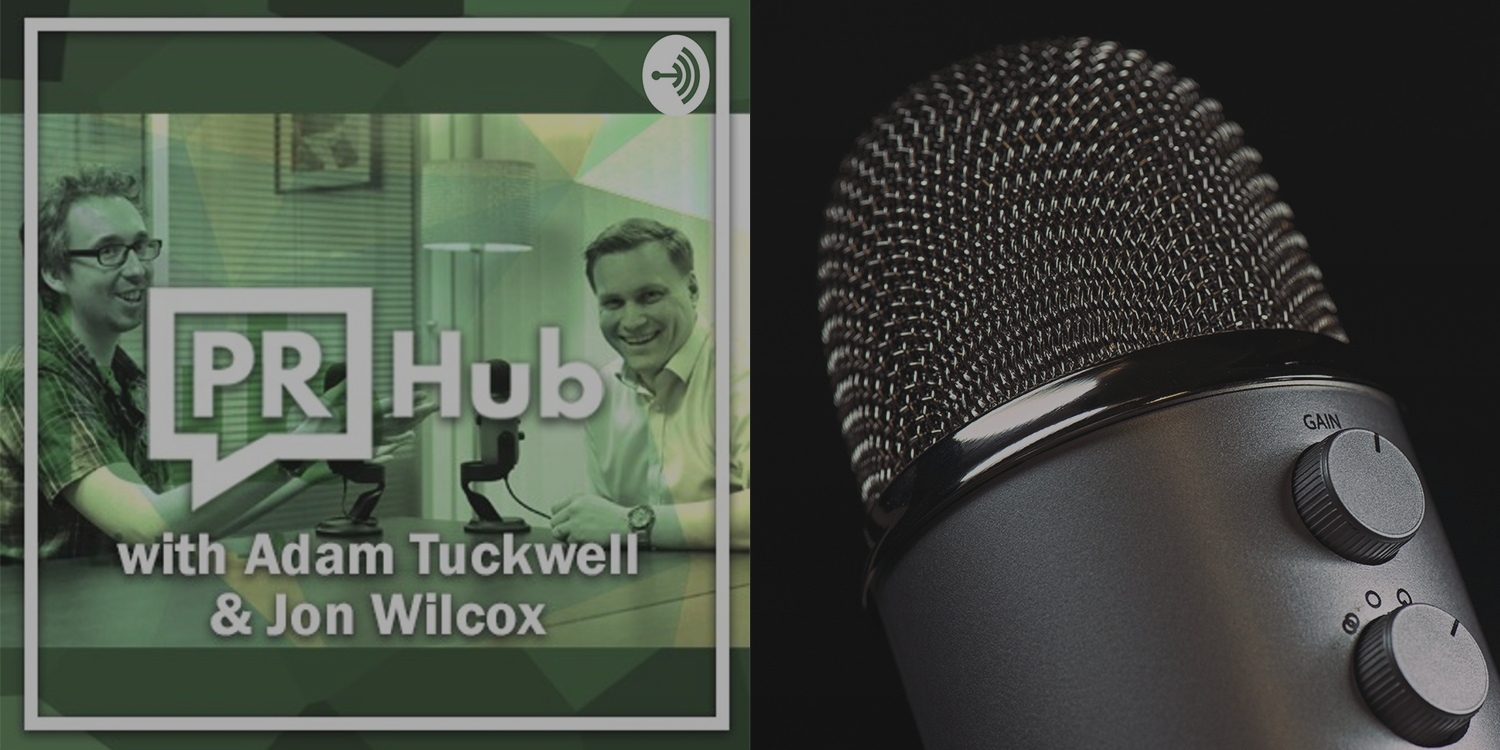
The PR Hub Podcast | An interview with the minds behind the mic: here’s Jon Wilcox and Adam Tuckwell in their own words, on starting a podcast, public relations, comms and podcasting advice.

It’s the Adam and Jon show!
The PR Hub Podcast – comms, marcomms and public relations chat (agency & in-house)
For those who haven’t listened before, the PR Hub Podcast has been running for 23 episodes across two seasons, starting life in March 2019.
Jon Wilcox: PR Hub Podcast
Described as a “conversational PR & marcoms podcast with special guests discussing the world of communications” with the caveat of '“sometimes sweary, always insightful”, the pod has evolved through the episodes, picking up increasing numbers on socials and pod platforms.
The format is an open, honest and often enlightening chat, looking at modern comms and PR practices.
Adam Tuckwell: PR Hub podcast
Picking the brains of both agency and in-house practitioners (with more in-house folk in the pipeline – don’t worry folks, the team are listening) reveals frustrations, ideas, trade secrets (ish) and campaign experiences to make us feel not so alone and inspired
Enough from me – here’s Jon Wilcox and Adam Tuckwell in their own words, on The PR Hub Podcast, comms and podcasting in general.
Full disclosure – they’re friends of mine from Cambridge-way and I’ve guest intro’d for one of their interviews (listen to the Andrew Bloch episode here – great intro IMHO 😉).
Who are you?
Adam Tuckwell: Well, I’m Adam – the smooth-sounding one from the podcast with a slightly posh voice and a habit of asking long-winded questions.
Jon Wilcox: And I’m Jon. The Welsh one. I'm a reformed journalist, which means that I - unlike Adam - actually make notes during our interview recordings. I try to think of deep questions and chipping in with my thoughts… when my esteemed colleague takes the occasional pause for breath.
What is PRHub?
AT: What is PR Hub? What a question. Some may see it as a PR podcast, but at its heart it is an excuse for us two to stay in touch, have a beer (virtually now, of course) and speak to some fantastic guests. We used to work together, so PR Hub actually started as a local networking do (again involving a drink) for PR pros in Cambridge. But this idea quickly grew, developed and morphed into a podcast, and before we knew it we were two seasons in!
JW: What's unexpected is that what started as a means for us to keep in touch has now grown to become something so much more. We were definitely finding our feet in so many ways during the first season, but with last year's follow up we loosened up and had fun with the podcasting experience.
We've been working on season three for a little while, and it definitely builds on what we produced in 2020.
When did it begin?
AT: Our first episode was back in March 2019. To tell you the truth, we had little idea what we were doing – as you can tell from the production quality – but we soon found our feet.
JW: It's so true, the first season is very different - we did some comms news, which obviously ages those shows, and we had numerous technical issues… not least that somebody (ok, me!) was speaking into the back of the mic by mistake for the first couple of episodes.
That's a matter of embarrassment to this day for me!
Why did it start?
AT: (laughing) There really wasn’t ever a grand plan. We just felt that there was a gap in the market. Most of the other PR podcasts were really bland, a little corporate and, to tell you the truth, rather generic.
We wanted to do something different, something that reflected us, our personality and to create something that would genuinely be of interest to people and help them grow and develop.
JW: I think what helped was coming up with the pod's strapline, 'Sometimes sweary, always insightful'. It sums up the pod really well!
How did Season one compare to Season two?
AT: Well, we were finding our feet, so I recommend you start with season two and work your way backwards chronologically. The committed will be rewarded with some genuine insight for some stellar and some surprising guests - but you’ll have to forgive our editing skills in the early days.
JW: And not just the editing… the format, the recording levels, the technical issues. Honestly, I think we should just transcribe the interviews from those episodes and publish them on a PR Hub website! At least that way people interested in the insight can avoid the dodgy production values of season one!
Season two is much improved!
What are your most memorable moments from the past two seasons?
AT: Interviewing guests from my garden shed was pretty memorable, but seriously, we had a blast recording these interviews. I’ve personally been really overwhelmed by how many guests have approached us, keen to share their stories and advice with others. I could list off countless funny stories, anecdotes shared once recording stopped, but instead the piece that resonates most with me is the episode we recorded with three stars from the PR Week 30 under 30.
It was truly humbling and inspiring to hear these young guys and girls speak about how our sector needs to change, grow up and tackle challenges like inequality, diversity and education head on. Trust me, if these three are anything to go by then our sector is in very safe hands.
JW: My most memorable moment was when Penny Mairoudhiou, the comms lead at Costa Coffee, called Adam out for what she described as a particularly strange question! There's also the epic two-part roundtable we recorded this past December with five returning guests from the second season - It was a lot of fun and so, so interesting!
Thoughts on podcasting ?
JW: Podcasting is radio on demand, it's incredibly accessible for audiences and it's equally accessible and cheap to produce. That's why it seems like everyone has a pod these days!
What programmes/software have you used?
AT: We’ve tried a few. We use Audacity (free) for editing, and have used Squadcast and, more recently, Riverside FM for group calls and guest recording.
JW: We use Anchor.FM as our hosting platform, which again is free, and we're also exploring how we can use YouTube as a delivery platform.
What hardware (mics)?
AT: We both have Blue Yeti mics and work computers - the kit can get crazy, but the basics do the job well enough for us.
JW: And pop shields. Do not forget your pop shield!
What was the most surprising thing about podcasting?
AT: Less about the medium for me and more about the people. Wow, I’ve been blown over by how open PR A-Listers and big names have been to share their wisdom with others. Oh, and by how many bigwigs get their account execs or juniors to reach out on their behalf. If you want to come on the podcast, at least have the decency to reach out in person.
JW: I think to add to what Adam said, it's been a surprise to realise just how much it is to do. I think we both enjoy the interviews as well as the post-production.
What was unexpectedly hard?
AT: Cutting down the episodes to a manageable time. We want the episodes to fit in a commute, run or walk - we could easily publish hour after hour but we know we need to be short and snappy.
JW: I think the hardest thing is to try and maintain a pipeline of interviews. Sometimes the gap between recording an interview and distributing an episode is a little too close to comfort!
Two top podcasting tips?
AT: Only do it if you have something to add, there are far too many ‘Me Too’ podcasts on the market. Don’t underestimate the time it will take to do, so you want to be sure people will actually listen.
JW: Yes, make sure you are talking into the correct side of the microphone! In all honesty I think my tip would be to try and have fun with it - and be brazen with who you want in your podcast (if you want to hold interviews and not to an episode-by-episode podcast discussing and dissecting a TV show.) We've interviewed people we never thought we'd speak with!
Where can we find you on Twitter & LI?
AT: You can follow us at @PRHub on Twitter or LinkedIn. I’m @AdamTuckwell and Jon is @JonWilcox_ (Jon has a blue tick and everything!)
JW: It's true, I'm a verified person on Twitter. We also have more followers on the hellscape social media platform than Donald Trump now, so that's huge! 😅
Like clever copy? Follow these copywriters
Three kick-ass copywriters to follow online for inspiration and ideas. Clever content creators, copywriters and wordsmiths to inspire & engage you with tone of voice, techniques for copywriting and beating writer’s block.
If you work in or around comms, you are 85% more likely to appreciate a good pun, clever wordplay or engaging content*.
Being a smart copywriter is more than words on a page. It is understanding the audience or personas you are talking to, the objective in hand, tone of voice of the business, brand or organisation, and being clear and concise.
Are you stuck for ideas, or got writer’s block? Maybe you want some inspiration for how to make your storytelling pop?
Follow these three creative copywriters for examples, ideas, and general tomfoolery. Christ knows we need it.
1. Dave Harland – The Word Man
Been following Dave for about a year now. Funny, irreverent, sarcastic AF Liverpudlian. The “Anti-bullshit #copywriter with massive fingers.”
Storytelling in the vein of Bob Mortimer, obscure references with always-solid insight and a take on how to make copy work for you.
With “lashings of wit”, Dave’s well worth a follow.
2. Harry Dry – marketingexamples.com
New on the block, Harry’s done a great job with Marketing Examples – his website, where campaigns are reviewed, showing how brands and organisations from Burger King, Tesla and LadBaby change language and tone of voice to connect with their audiences.
Check out this webinar with The Marketing Meetup, where Harry explains how he grew his newsletter to 38k subscribers in a year!
Check out Harry here on Twitter, LinkedIn or Marketing Examples on Twitter. Instagram is visually pleasing too, obviously.
3. Fi Shailes – Write//writefulcopy.com/
Content and social strategy specialist, Fi has been running Writeful (previously Digital Drum) for nearly a decade.
It features helpful articles (and honest rants) on everything from copywriting and content marketing to UX, content design, and social media. You’ll also find the occasional interview with industry folk like Sarah Winters (Content Design London), Ryan Wallman, and John Espirian.
You can find Fi on Twitter, but do take a look at her Content Therapy LinkedIn newsletter too!
Lots of good examples and inspiration there.
If you want to talk to me about your content, copy or tone of voice, contact me here, or give me a call on 07870 408102.
*I completely made that up… thanks for reading this far!
Burger King: biggest rebrand for 20 years
The first Burger King rebrand for 20 years has taken inspiration from its heritage, with 1960s/1970s colours, stripped back font and echoes of the dawn of the fast food revolution. New Whopper logo, BK font, graphic design overhaul in this fast food rebranding.

(Image credit: Burger King Corporation)
A short signposting one, as it is Friday and I’m not meant to be working…
After seeing a tweet heralding the rebrand of Burger King – its first redesign in more than 20 years – I thought I’d take a closer look.
The Burger King rebrand – logo, font, design overhaul
Courtesy of Its Nice That – Burger King GIF of graphic design and new branding (Image credit: Burger King Corporation)
The first Burger King rebrand for around 20 years has taken inspiration from its heritage, with 1960s/1970s colours, stripped back font and echoes of the dawn of the fast food revolution. “Deliciously retro” as CreativeBloq says.
As Fast Company notes, the new brand identity includes “a custom serif typeface and retro colors, like mustard and burnt orange, that mimic the organic shapes and colors of Burger King’s menu items.“
Wicked design blog It’s Nice That (give them a follow), says it “introduces a brand font inspired by the shape of its burgers, with a rich new colour palette, to create a more digital-friendly identity.“ Clever from BK, and parent company RBI (Restaurant Brand International).
Kudos where it’s due to design agency Jones Knowles Ritchie, who seem to have nailed making Burger King “feel less synthetic and artificial, and more real, crave-able and tasty.”
Thanks for the flag, Patrick Schreiner. As you rightly say, it is both “trippy and amazing”.T
Read more about the redesign, from far better designers than me, on:
It’s Nice That – The Burger King rebrand celebrates its design history and irreverent personality
Fast Company saying “You can almost taste the typeface” – Burger King unveils its first major rebrand in 20 years
Why the pandemic is making life more deregulated
2020: the deregulation of life increases | The concept of deregulation has been accelerating across all aspects of our lives, the pandemic has switched it into top gear. As we push through a second lockdown, in winter, Tom Johnson of Trajectory Partnership looks into the acceleration.
By Tom Johnson of Trajectory Partnership.
The deregulation of life continues in 2020
Throughout 2020 pandemic-influenced changes have accelerated a long-term trend we call The Deregulation of Life (see here for a PDF report of ours from 2016). Put simply, this means that people have more control and freedom to choose what they do, when they do it and how they do.
We’re all living increasingly-busier lives…
Deregulation has been happening in different guises for decades. It’s often driven by legislation that allows certain activities to be done at different times – such as the Sunday trading laws of the 1990s, or the liberalisation of on-trade alcohol sales in the 2000s – or by social attitudes and behaviours evolving.
For example, men do a greater share of household chores, cooking and childcare than they did in the 1960s or 1970s. It’s still a long way from equitable, but some progress has been made.
Technology also plays a huge role. Only a couple of decades ago, we could only shop when the shops were open. Now it is a 24-hour activity – thanks to the internet, almost everything is now a 24-hour activity.
This year, the key transformation isn’t in when activities happen, but where.
As a result of social distancing more activities are taking place at home. During lockdowns, everything that can be done from home is. Rather than go to the gym we join an exercise class at home. Rather than go to the shops we order online. Instead of meeting friends and family at a café, pub, restaurant or bar, we Zoom them.
Many of these home-based activities are pale imitations of the real thing. Tech is a lifeline but we’d rather see our friends and family in the real world than on a video call. Our own work in this area has consistently found that people enjoy out of home leisure more than anything else, and the relative success of Eat Out To Help Out is evidence that with the right motivations even a pandemic won’t keep consumers away from leisure and hospitality.
But other things are better at home – and work is one of them. During the first lockdown, more people were working at home than in their place of work. The trend since then has been one of a gradual return to the workplace, but at no point did it completely revert to the pre-pandemic level.
UK Workers: Primary location
UK Workers Primary Location (Trajectory Optimism Index: May-Oct 2020)
Most workers enjoy the extra freedom and autonomy that comes from working at home and they have an extra few hours a week to spend how they wish, because they are not commuting.
It’s important not to exaggerate the shift to home working for two reasons, as we explored in this previous blog:
First, this is only relevant to a subset of the UK workforce. Many jobs, from teaching to retail to manufacturing to social care can’t be done at home.
Secondly, the office isn’t dead: for meetings, training and creative tasks, we’ll once again need a common space to collaborate. Instead, hybrid working will become more common, splitting the week between here and there.
But the bottom line is that more flexible working is here to stay.
This is so powerful because where we are when we work affects where we are when we’re not working: including where we live and where we spend the rest of our time.
It also poses some real challenges for employers, not least in terms of how you embed culture in a workforce without a shared location, and the best way to use a workplace when it isn’t the default home of all staff (see Jenni Field’s Remotely Interested report for more on this). But workers themselves will find they have more freedom and control over both their working lives and their wider lives as a result.
Along with working from home, we’re also better equipped to change the locations of other activities too, thanks to our experiences this year.
This is the next stage of the Deregulation of Life.
If you enjoyed this blog, check out these from Tom:
https://www.authenticcomms.co.uk/blog/going-back-to-work-ditching-the-office-is-not-the-new-normal-for-everyone
https://www.authenticcomms.co.uk/blog/what-next-tradeoffs-lots-of-tradeoffs
Tom Johnson is Managing Director of Trajectory, the leading trends and foresight consultancy. Tom and Trajectory use data and forecasting techniques to understand changing consumer behaviour and map out the future.
Always. Beat. Chester.
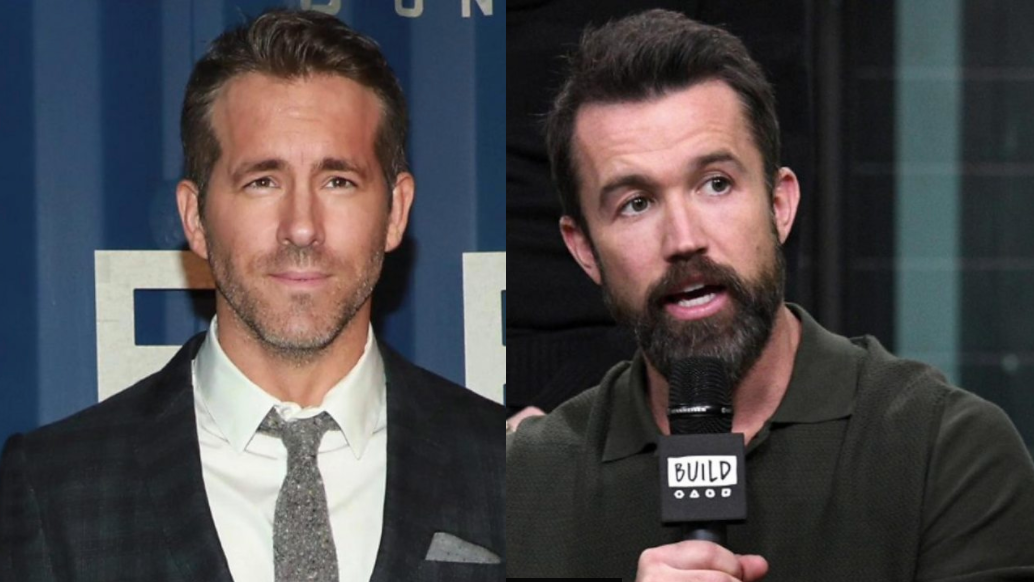
Hollywood stars @ Wrexham AFC | Ryan Reynolds & Rob McElhenney became joint-owners of the football club with a whopping 98% of fan support. Take a look at one of the best mission statements in years, and their brilliant tone of voice in communications.
Mergers, acquisitions, takeovers – they all come with an element of trepidation, if not risk.
Any communication professional worth their salt should pre-empt potential crises with a cohesive list of FAQs, possible outcomes and potential impact among stakeholders and colleagues.
This week has seen the culmination of a great example of how to counteract potential negativity with proactive clear communication, talking with your audiences, transparency of process and humour. Realise this example is not applicable for every sector or business model, but take a look and let me know what you think. Some food for thought, for sure.
Introducing RR McReynolds Company, LLC
Coming straight outta North Wales, Wrexham AFC hit the headlines earlier this year, when it was revealed that Hollywood royalty were in talks to takeover the club.
Courtesy of BBC website
Ryan Reynolds (of Deadpool and Sexiest Man Alive fame) and Rob McElhenney (star of It's Always Sunny in Philadelphia) have become joint-owners with a whopping 98% of fans backing their plan.
Described as "a few wild months", RR McReynolds Company LLC (great name BTW), approached one of the club directors through an intermediary before agreeing terms for a takeover bid, that then had to be approved by the supporters trust.
Wrexham AFC, founded in 1864, became fan-owned in 2011 when the Wrexham Supporters Trust (WST) took control of the club. The past few years have been full of the ups and downs of football – playing and financially – but they were not actively seeking any investment.
For Wrexham, a lower league team – and third-oldest club in the world – this is the stuff of dreams.
Mission statement goals
Something that sums up the approach of the two gents is the construct and tone of voice in their mission statement – usually a relatively dry, ambiguous piece of material.
A few points to pick out:
Set the tone within the first few sentences; engage your audience – “We’re two people who’ve made a career of never taking ourselves too seriously. However, we realise taking stewardship of this great and storied club is an incredibly serious matter and something we don’t take lightly. With that in mind, we wanted to take you through our Goal, Principles and Promises.”
Communicate honestly and openly – “Everything we do will be informed by these four principles and never one without the other. We want to be part of Wrexham's story, not drag the club into ours.”
Relevancy with your audience, albeit via humour – Wrexham, as with most sports teams, have a rival; “Always beat Chester“ is repeated three times, last one in CAPS.
Hard Promises; eleven, tangible detailed assurances (some local) to benchmark success and work towards: – including “Guarantee the club cannot be relocated, renamed or rebranded”, “Recognise and reinforce Wrexham AFC's role as a leading force for community good in the town“ and “Invest in a permanent training facility that is worthy of an EFL club.”
See the full statement here: https://www.wrexhamafc.co.uk/news/extraordinary-ballot-rob-mcelhenney-and-ryan-reynolds-mission-statement
Charm offensive
This week, they announced the ownership in a special way, revealing an epic video released to announce their success (see below), with a great shout out to main sponsor Ifor Williams Trailers, and Reynolds sharing a recent post of him following games from the US.
Furthermore, the guys seem properly nice people – McElhenney recently paid for the accessible bathroom renovation of a disabled Wrexham fan, and Reynolds is a big supporter of both Make a Wish and the Michael J. Fox Foundation.
Good luck to them, and to Wrexham.
So, what do you think of the takeover comms? Do you think the story is PR spin, genuine interest and engagement, or something in-between?
Let me know your thoughts below.
Fish where the fish are still swimming
Guest blog by Michael Brennan | With Lockdown 2 in England, and other UK restrictions, Michael looks at the importance of marketing to local audiences for businesses of all sizes, and engaging via mobile first channels during the ongoing COVID-19 pandemic.
By Michael Brennan
2020 has probably taught us all a few lessons. For example. Expecting and preparing for the unexpected? Certainly. The importance of digital connectivity? Without doubt. The strength of local communities? Definitely.
There has also been much talk of a humanisation of business. Driven by lockdown and enforced remote working, this reflects the importance of employee support, but also consumer empathy. In both cases we need a real understanding of circumstances and changing needs – and a commitment to respond to the issues highlighted.
(The importance of organisational values aligning with real-world behaviours was discussed by Jackie Le Fevre in a recent post)
As I write at the start of November, Lockdown 2 has taken effect in England, while other restrictions remain in place in Northern Ireland, Scotland, and Wales. We can’t yet know how successful this lockdown will be, but all the indications are that we are set for a long winter (at least) of continuing restrictions and further lockdowns.
So, if this is today’s normal how can we hone our marketing communications for the coming months?
Most of you will have some digital marketing capacity; an email list, a WhatsApp group, a Twitter following or a Facebook Group for example. All of which enable you to keep communicating with customers and to respond to changing restrictions and local conditions.
Many of you will also have invested resource into profiling your local area, identifying local employers and the self-employed, families with children, sports fans and teams, community groups and forums, and many other possible audience segments. Others will have built pandemic driven lists of those shielding or otherwise vulnerable.
Put together you have a powerful and efficient vehicle for communicating the right messages to the right local audiences for your business. And we know that this has never been more needed than now.
Mobile driving local connections
As such any available resource should be invested in local communications and community outreach - for which mobile is the obvious vehicle. There has been much talk of the acceleration of digital transformation caused by the pandemic. Make now the time that you really pivot to a mobile first communications strategy.
And that in no way means contradicting the channel neutrality at the heart of the Authentic proposition. You know from your own behaviour that the primacy of mobile doesn’t directly correlate with individual channels.
What a Mobile First approach does reflect is that the fact that, as Ofcom report, over 80% of total online time is now spent on a mobile or tablet device. And across the UK we spent an average of 4 hours and 2 minutes online each day in April 2020 – rising to over 5 hours for 18-24 year olds.
We heard the importance of local messaging, and humour, in Kate Vogelsang’s recent post, never more important than now as the national consensus around Covid has fragmented in the face of changing regional and local restrictions and a punitive approach from central government.
We are all living life even more locally than ever before. There is serious hope that long-term changes to working patterns may benefit smaller towns and high streets as more people work flexibly from home for more of the time.
Mobile offers multiple opportunities to engage with the local community, but the single most important starting point is to be visible to your audience – where they’re spending their time.
And then you can think about best to play to your strengths and how to cut through:
If they can’t have a Sunday roast at the pub what tips can you share to help them do one at home?
If they’re not going to be out for cocktails, how they can make the best of what they have at home?
If they can’t make the pub quiz can you run one online?
What about local competitions, treasure hunts and the like?
For those with younger audiences there are exciting local marketing developments happening at Snapchat, while TikTok has rarely been out of the news this summer as it continues to engage and enthuse ever more young (or young-feeling) people with its offbeat video format.
There is so much that you could do on mobile, but of course it’s a question of priorities, resources, and skills. To the latter point, there may be opportunities at this time to work with local talent to develop your approach. Too many young people are currently seeing their ambitions and careers put on hold, why not reach out and see how you could make this work for both parties?
So, some thoughts on why you should be thinking Mobile First for your immediate communications needs and into the future. Now is the time to find your brand voice and to get out and swim with the community, as we all attempt to navigate this new reality and set ourselves up to bounce back better.
Michael is an independent researcher, writer and marketing consultant. You can connect with Michael via LinkedIn here.