
BLOG

Five ways your strategy should be like motorway driving
Driving on the motorway can be a lot like your business or organisation’s strategy – stay strategically focused, be clear in your strategic actions, don’t be distracted. Read on for car-based analogies and puns.
Well, that was a weekend and a half. TLDR – storms x tummy bugs. Anyway, as I write this I’m sat at Cambridge North station waiting on another (soon-to-be-cancelled) train, so may as well write this up.
Idea came as I was sat in slow motorway traffic yesterday, with most of the family asleep, and my beautiful one-year-old grumbling (teething, so screaming) away.
Bit light-hearted, this one – go with me.
Five ways your strategy should be like motorway driving

You’ve got to get up to speed to join in
Take time to get your strategy right, build up your speed gently but steadily, and then get involved in the mix.
Don’t jump the gun and pull out until you’re really ready - in the right gear, checking before you pull out into the traffic/marketplace.
And for goodness sake look behind you. You could be pulling out / launching / doing the same thing as someone else!

Indicate, FFS
I mean, obvious, right? That little switch next to the wheel?!
It gives other people around you - customer, clients, colleagues, stakeholders, investors - the idea of what you’re doing. An indication of your ‘direction of travel’, and an important step in showing how you will act. I.e with an indication (courteous, kind, thoughtful) or without (not).
Clean your windows
Otherwise you can’t see where you’re going. A clear, unobstructed view is important to make decisions.

Don’t be distracted
Using your phone is illegal and dangerous. At worst, you risk the lives (livelihoods) of all the people in your vehicle (organisation), at ‘best’ you worry people who think you’re not in control, or scare them with erratic moves. Stay focused.
Go with the flow
(QOTSA, anyone?) It’s not always about being the fastest, overtaking or hogging a lane. Move around, find where you’re comfortable, let others ‘pass by’ and concentrate on being you.
Sometimes you’ll need your energy and focus to act quickly (an opportunity or a crisis situation), and sometimes you need thinking time - cruising along before making the next big decision; should I stay on here or turn off?
There are other roads you know…

Let me know what you think and whether you have any other cheesy/crass/cracking car analogies.
I’m looking at a few of you pun-heads, in particular…
Ad 🚗 (writing this on a 🚊 that is hopefully going to London)

A tale of two charities
Governance matters – especially in not for profit. In this guest blog, charities consultant and former charity CEO David Burland looks at last week’s charity governance news. What happened with the Charity Commission’s enquiries into the Captain Tom Foundation and the results of their enquiry/review into the Kids Company?
It’s not often you get two stories about charity governance in the headlines at the same time. But last week, amidst Ukraine and party-gate, we heard first about the Charity Commission’s enquiries into the Captain Tom Foundation and then the results of the regulator’s review into the Trustees management of Kids Company.
Taken together, these reveal much about the present challenges around the governance of charities.
The Captain Tom Foundation

Captain Sir Tom Moore Creator- Joe Giddens - PA Images Copyright- PA Wire/PA Images
The vast majority of the income from Sir Tom’s fundraising efforts were managed by the existing body NHS Charities Together. The Foundation set up in his name is a very new charity and so, understandably, still finding its feet. But the fact that they had spent considerably more on support costs than given out in grants to charities in their first year, and that much of the former went effectively to family members, caught the media’s attention.
This story shows the challenges for Trustees setting up a charity to take forward the legacy of a well-known public figure, set against the expectations of how society think charities should operate. What I found honest and refreshing was the response by the Trustees that they welcomed the Commission’s input and were working closely with them to move forward.
Kids Company
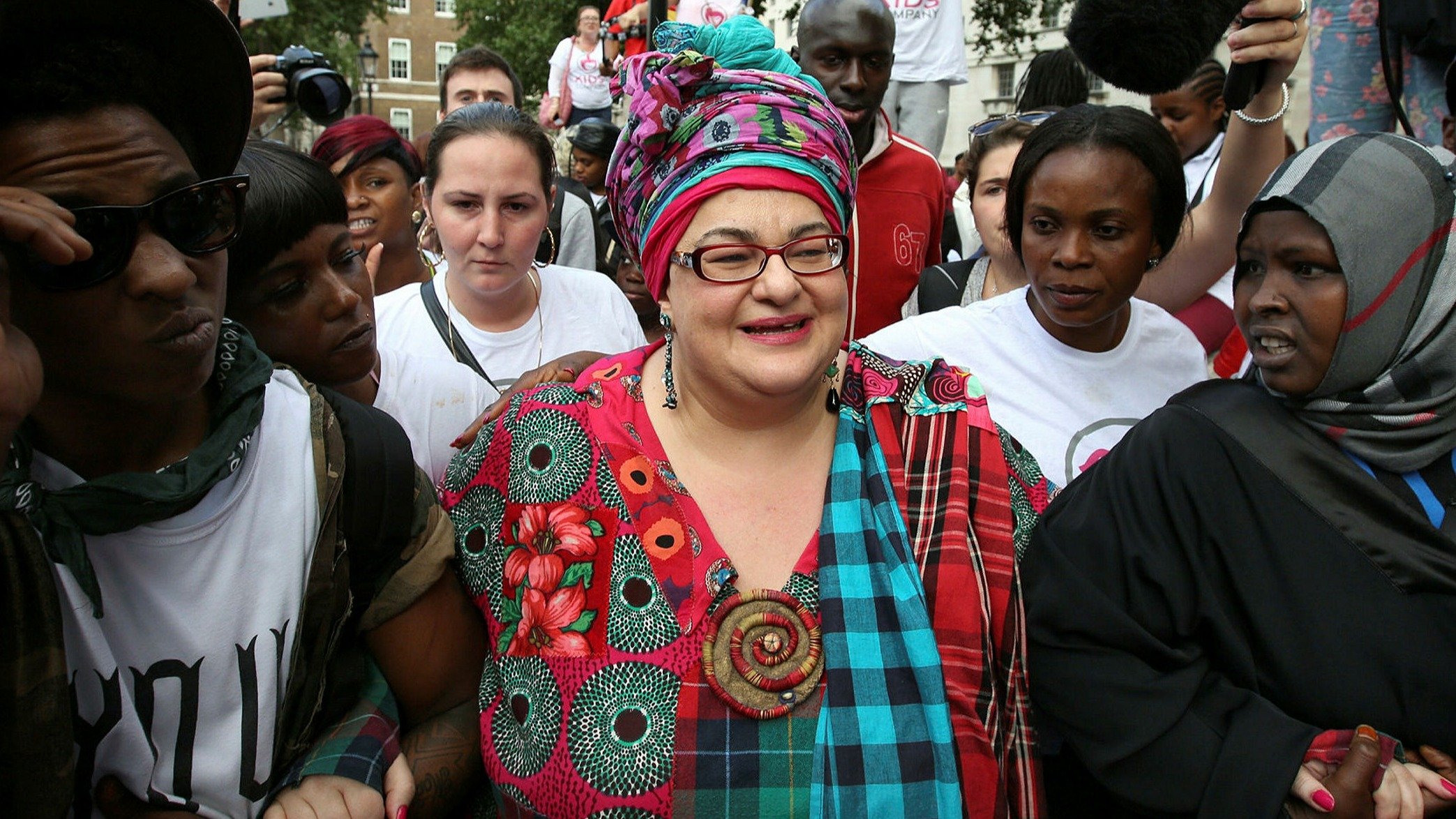
Kids Company founder Camila Batmanghelidjh
© Peter Macdiarmid/Getty Images
By contrast, Kids Company spokes people were robust in their defence against the Commission’s accusation of mismanagement.
One can quite understand that having had to go through the many years of investigation by the Official Receiver and given that the outcome of that process was very much in their favour, then it was difficult to read the Commission’s report. However, some of the responses to the regulator’s findings seemed to argue that as these were hard working volunteer Trustees trying to manage a complex charity involved in very difficult work, they should be beyond criticism. Surely there can - and should - be lessons learned from any organisation not paying taxes due or employees’ salaries?
What does this mean for charitable/not-for-profit governance?
What both these stories reinforce to me is that our (basically) 19th century model of governance is not suitable for many charities in the 21st.
The prevailing approach is based around the voluntary input of Trustees giving their time and expertise as and when they can. Such roles can bring a significant degree of risk, both legally and in reputation, in overseeing what can be very complex and high profile organisations with seven-, eight- or even nine-figure budgets.
For an alternative approach, at least for some charities, read the article by Philip Kirkpatrick on ‘Assured Unitary Governance’. Philip’s firm, Bates Wells, were one of those defending Kids Company Trustees.
This lays out the deficiencies in the current model and offers a sensible way forward which recognises that it is paid Executives who really manage charities, but that governance should also involve those in Non-Executive roles and an added layer of accountability.

David Burland is founder and lead consultant at db Associates, expert advice services for the voluntary sector.
He was CEO of Shooting Star Chase, one of the largest children’s hospice services in the UK, as well as Deputy CEO of Help the Hospices (now Hospice UK).
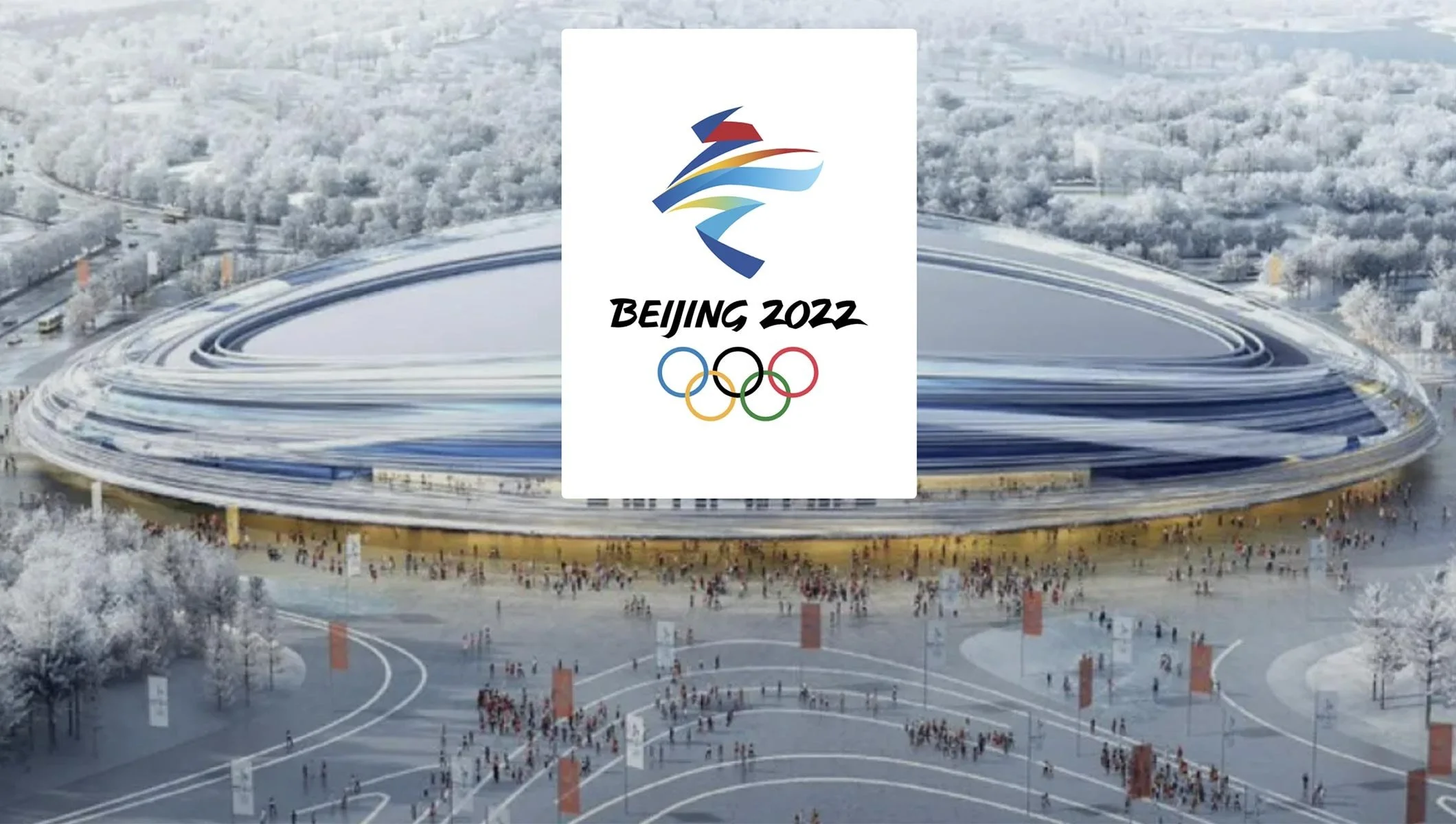
Why we haven't heard much about the Beijing Winter Olympics 2022?
So, here’s a brief summary of some reasons why we’re not seeing much about the Beijing Winter Olympics 2022. Some may seem obvious – human rights etc – but are we seeing a sea change in the way sports and politics/purpose intersect and evolve?
This year, the coverage around the Winter Olympics have been decidedly subduded.
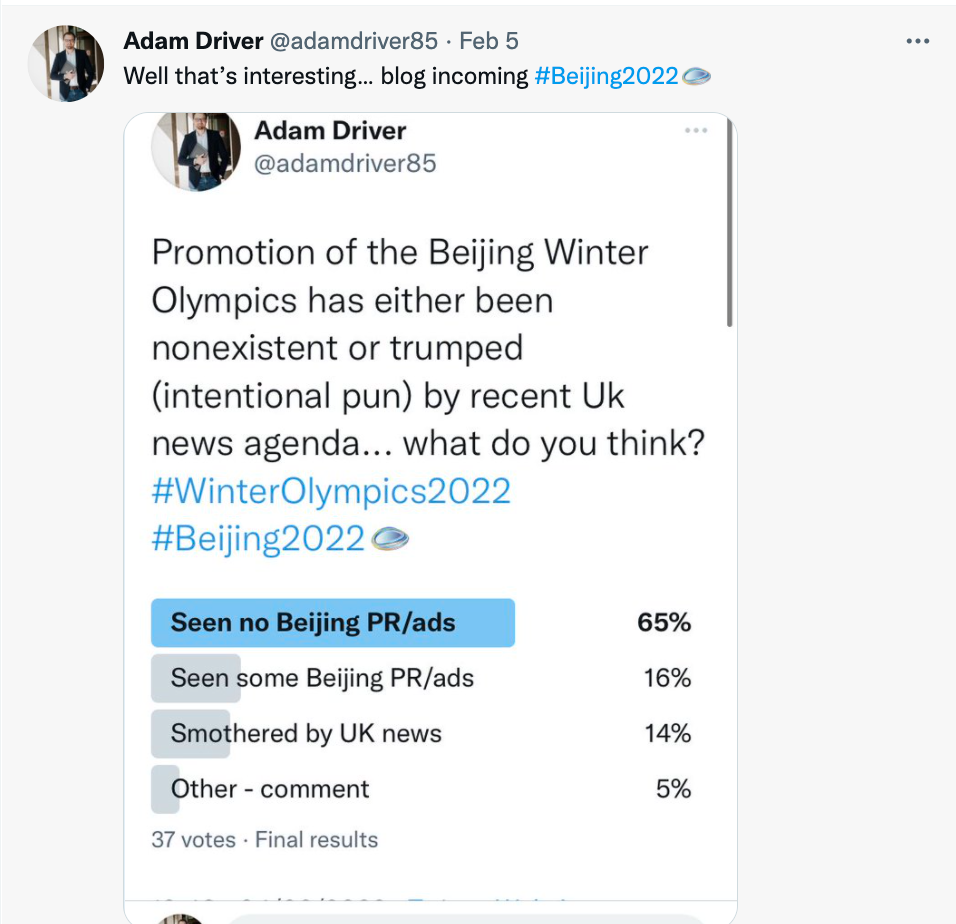
After a Twitter poll (ugh, yes, sorry), it started me down a rabbit hole, in part thanks to Gihan and Nick’s insight.
So, here’s a very brief summary of some of the reasons why we’re not seeing much about the Beijing Winter Olympics 2022. Some may seem obvious – human rights etc – but are we seeing a sea change in the way sports and politics/purpose intersect and evolve?
Or is the lack of TV coverage, diplomatic controversy, Chinese human rights issues, brand sponsorship worries and unsustainable fake snow just par for the modern course?
Why is there little to almost no Winter Olympics TV coverage on the BBC?
So, there are a few things going on in the UK right now – waves arms around wildy – yet sport used to be a staple of telly listings, especially the peaks of interest from the general public in obscure sports that we may actually win. See curling and skeleton (Lizzy Yarnold and Amy Williams).
[Help me out sports comms folk…]
The BBC does have coverage, yet it is most certainly reduced. So why?1
In three words, commercial TV rights. See quote below from iNews piece from last year, about why the BBC’s Olympics coverage has changed (“Why the BBC’s Olympics TV coverage is limited to two live streams: Tokyo 2020 Discovery deal explained”), which is a better explainer than I could do:
“
In 2015, the International Olympic Committee and American TV giant Discovery agreed a £920m deal for “all TV and multi-platform broadcast rights in Europe” of the four Olympic Games in the 2018-2024 period.
For the UK this applied from 2020, meaning the delayed Tokyo Games is the first instance where viewers in the country have come across this change.
Discovery, who own Eurosport, were required by the IOC to make hundreds of hours free-to-air, and while the company is able to do so though their own channels in countries including Norway and Sweden, no such free-to-air channel exists in the UK. As a result, Discovery agreed to sub-license the rights to BBC.”
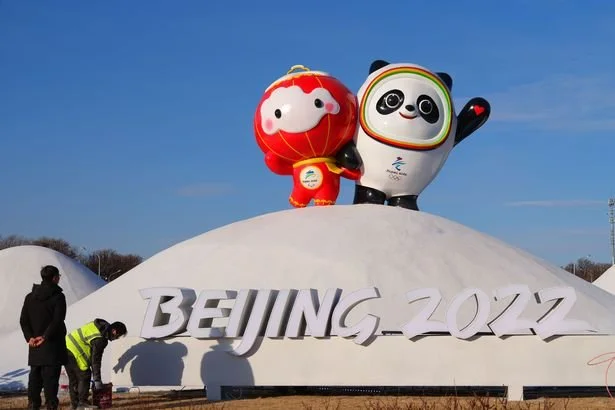
Why is the Beijing Winter Olympics controversial?
Gone for bullets here for ease. There’s a lot.
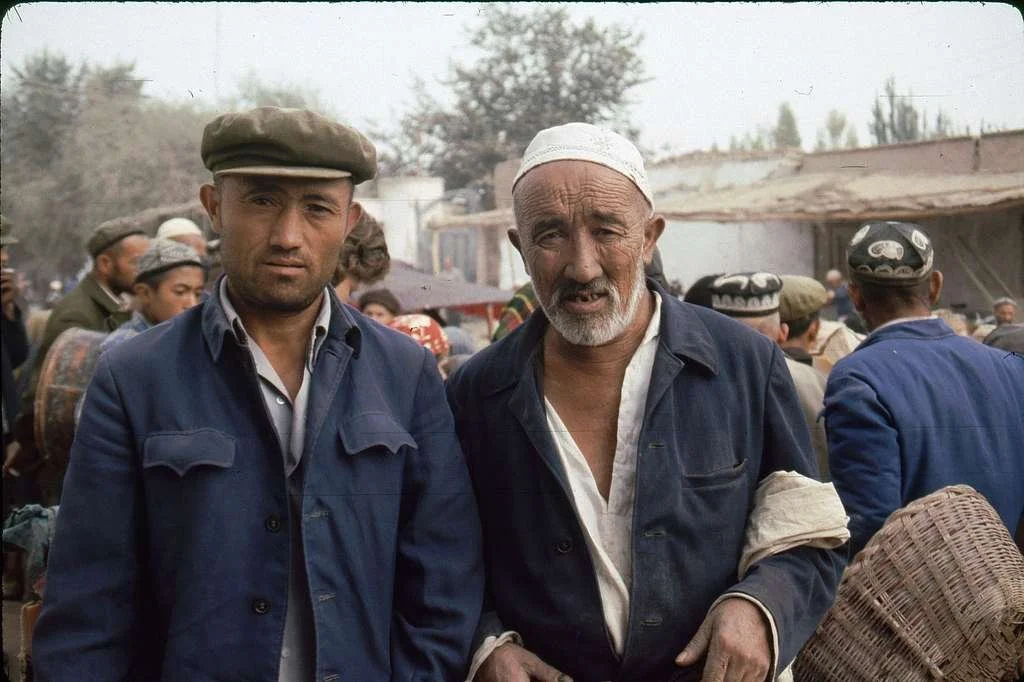
Human rights – how long have you got?! Beijing is being called out over human rights abuse in Taiwan, anti-Chinese protesters in Hong Kong, and documented abuse of the largely Muslim Uyghur population in the Xinjiang region.
Diplomatic boycotts – remember similar in Sochi back in 2014? “The US, UK and Canada have declared a diplomatic boycott, along with India, Australia, Lithuania, Kosovo, Belgium, Denmark and Estonia. All countries have sent athletes (which legitimises it?), but no officials or ministers are in attendance.
Covid-19 – no general public due to coronavirus restrictions. And a zero-Covid dilemma.
Economic division – Countries such as the Philippines, South Korea and many in Africa are unable to boycott due to fear of what the economic fallout could be.
Sustainability – fake snow for one. “About 1.2 million cubic metres of artificial snow is being used because so little falls in the region.” The environmental impact is said to be monumental. More here.
Cybersecurity/phone hacking – Cybersecurity group Citizen Lab said the app for Covid monitoring is a risk to use, with weak encryption systems and could be exploited by hackers.
Several countries have reportedly told athletes to leave their main devices at home and use burner phones at the Games.
Plenty more in this explainer piece from the Beeb. Looking forward to the Ros Atkins explainer.

What are the Beijing 2022 sponsors doing?
In short, not much. Thanks Gihan of Communique for the heads up on this.
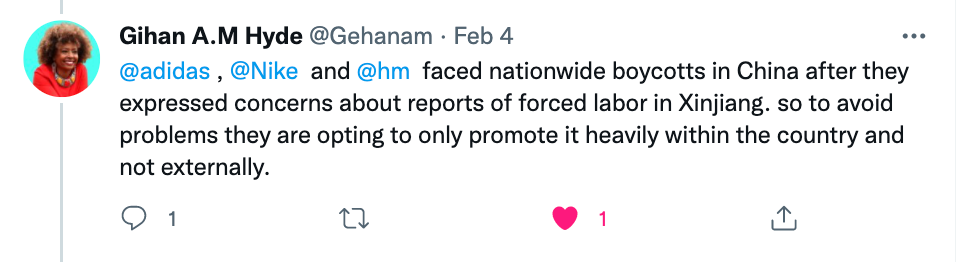
Some really interesting pieces here, for anyone involved in marketing, advertising and sponsorship. How does a brand handle issues such as the above…?
Wall St Journal: Adidas Takes Hit From Boycott in China, Once Seen as a Growth Engine
Reputation at risk for sponsors – great quote from Andrew Crane of Bath Uni below in France 24:
"Companies including Airbnb, Alibaba, Allianz, Atos, Bridgestone, Coca-Cola, Intel, Omega, Panasonic, Procter & Gamble, Samsung, Toyota and Visa have paid a combined $1 billion to help fund the 2022 Winter Games, despite widely reported ethical issues.
“Once they committed to sponsoring the Olympics, they committed themselves to walking an ethical tightrope,” Andrew Crane, professor of business and society at the University of Bath, told FRANCE 24. “There are risks either way.”"
Let me know what you think, and how you would advise an organisation in a similar position? Look forward to hearing your thoughts below/respond on LinkedIn/Twitter ✌️

What is Hubris?
What is hubris, what is the origin and definition of being hubristic or showing a hubristic personality, and how can you deal with someone at work with showing behaviours of acting with hubris.
What is hubris, what is the origin and definition of having a hubristic personality or showing traits of hubris , and how can you deal with someone at work showing behaviours of acting with hubris?
What is the definition of Hubris?
Hubris {hue-bris} is a noun, meaning excessive confidence or exaggerated pride.

What does Hubris mean and where did it come from?
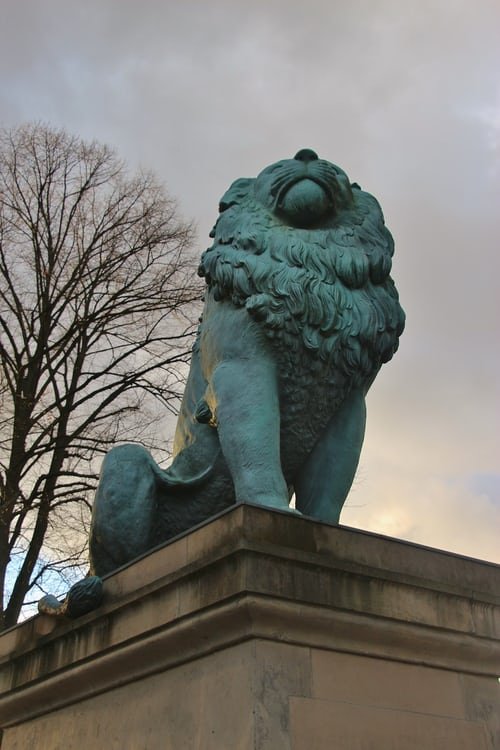
Originally from ancient Greek, it is a dangerous character flaw, capable of provoking the wrath of the gods. And you do not want that wrath hanging over you.
The word’s connotation initially meant the “intentional use of violence to humiliate or degrade”, and this changed over time as hubris came to be defined as “overweening presumption” meaning an individual disregards “the divinely fixed limits on human action in an ordered cosmos”. Recognise that in anyone?!
Hat tip to Mark Rosselli for introducing me to the word – co-founder of a previous agency, who was a very knowledgeable and erudite man. Intimidatingly so at times (!).
What are examples of hubristic personalities?
There are many examples of hubris in the public domain. For example, much of the UK Government currently and plenty of leadership examples from CEOs / chairmen / heads of state.
Click the image gallery below for more detail on each of these stories:
(feat. James Watt of Brewdog, North Korea’s Kim Jong Il, and Elizabeth Holmes of Theranos)



Pride comes before a fall
Harking back to classic Greek tragedy, hubris was often a sometimes fatal shortcoming bringing on the fall of the tragic, overconfident hero.
This overconfidence and overfocused zealous attitude, led the hero to try and overstep the boundaries that some of us live by – morals, values, such as integrity and honesty – moving into a ‘godlike’ sphere.
And the god’s did not take kindly to this, often smiting down said hero, putting them back in their place. I do like a good moral smiting. More of this IRL please. (Ahem - Sue Gray)
Hubris at work
So if you see experience these traits in the workplace or with a colleague or client for example how can you counteract it?
The barrel chested stance, the ability to bareface lie, the refusal to see other viewpoints or listen to advice.
NOTE I am not a qualified coach or therapist, and these are my opinions, so please take the below piece of advice with the appropriate pinch/bowl of salt.
1. Counter with facts
Hubris considers elements that people want to believe. In some cases, they truly believe that they are factually accurate.
Bring data, references, faces, figures and examples, as well as realistic expectations from yourself, to try and ground any conversations, removing the discussion from a ‘you versus them’, tit for tat scenario.
2. Stay calm
If you feel like you’re getting riled, or that the heat is getting turned up, take a step back. On some occasions we can associate hubris with aggression and that never really turns out well at all.
Don’t know if you’ve tried to engage/protect yourself from someone with excessive pride. I have. Didn’t turn out well.
Explain you’re not going to discuss at the present moment , and remove yourself if you feel threatened or belittled. Rearrange or have someone with you potentially as a mediator or conduit, if not, as a third party witness.
And 3. DON’T roll over
On certain occasions (emphasis on not all), those with a hubristic personality or displaying tendencies, can ‘appreciate’ the person opposite them (you) standing up for themselves. You don’t need to shout, just bring the facts and present them.
If you are anxious, worried or scared, take confidence in the fact that your opinion matters and you have value, and raise this with the individual in the appropriate, yet firm, way.
Hope that was of interest, let me know what you think, comment below or on the social post you followed, and how you have handled and hubristic personality that you may have encountered, worked with or married. Ok, that last one was a joke.

What do Hob-Nobs, Homebase, Viagra, Mondeo and Punto have in common?
They were all the brainchild of one person – John Murphy, aka the ‘Brandfather’, with his branding agency Interbrand.
Read more about the man who created the phrase branding and brand value here.
All these brands were the brainchild(ren) of John Murphy, aka the ‘Brandfather’, with his marketing and branding agency Interbrand. But who was ‘the man who invented branding’, and what other names did he come up with?
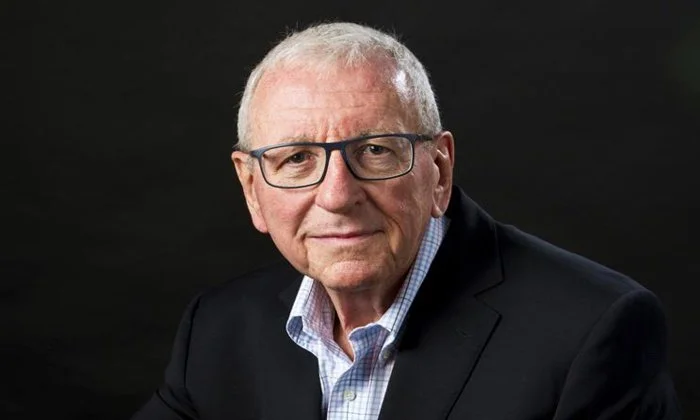
John Murphy aka the ‘Brandfather’
Interbrand

In 1974, John founded Interbrand in London, after working for tyre brand Dunlop and discovering the power of brand names and trade marks.
Before Interbrand began properly, John started under licence in the UK for a French name creation businesses Novomark. It developed and tested names, handling all the compliance issues and legal documentation for IP (intellectual property) clearance.
“Advertising agencies,” says Mr Murphy in a 2017 interview, “could only offer slogans, rather than names which could be protected as a trade mark, and an in-house competition demonstrated only that the task was no job for amateurs.” One suggestion was “Jack the Gripper”…’
Interbrand, and John, allegedly coined the term ‘branding’ and came up with the concept of brand valuation.
Branding and brand value
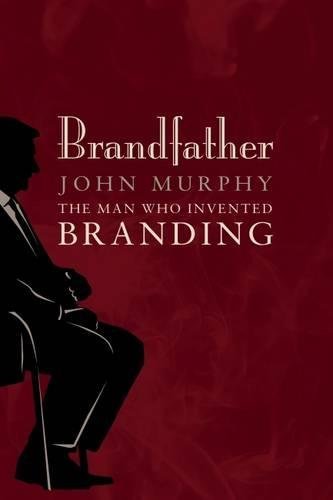
Through the 70s and 80s, the business evolved with offices in New York, Paris, Frankfurt and Tokyo, before repositioning themselves as being in ‘branding’, as part of a marketing and business discipline. Accordingly they added market research, brand strategy consultancy, packaging and corporate identity design to their creative and trade mark legal services.
Increasingly, Murphy came to realise that they were not mere wordsmiths; they were creators of 'brands' - a scarcely-known concept in the early to mid 80s.
As Novomark (renamed in due course by John as Interbrand) grew, projects included the creation of international household brand names that we all know – such as Mondeo, Hob-Nobs, Homebase, Viagra and Punto.
Novomark was commissioned by McVitie’s to develop a name for a new biscuit. “They wanted a name which was fairly banal, boring even, but just on the right side of being protectable, so that supermarkets could not easily bring out own-brand imitations,” says Mr Murphy.
In 1988, Interbrand moved the dial even further and developed ‘brand valuation’ – the financial value and equity of a brand – causing quite a stir in marketing and advertising sectors.
Post Interbrand
After selling to Omnicom in 1994, John continued to create and evolve brands – why stop what you’re good at…? – with some standout notable brands being:
St Peter’s Brewery – living in Suffolk in the 1990s, John spotted a potential gap in the market for a British ale for the overseas market. The name St Peter’s was inspired by St Peter’s Hall at South Elmham, which was identified as a potential base for the business.
Plymouth Gin – in 1996, John and a group of shareholders bought the flagging brand and reversed the declining fortunes, gaining supermarket distribution and 20 markets abroad.
As ever, let me know what you think – had you heard of John? If not, what do you think?
Check out the brief video below for some great entrepreneur advice from John himself.


Further reading:

Sorry seems to be...
Sorry seems to be the hardest word – why is it so difficult to say sorry? Apologise when needed? How can you may sure your apology is sincere and heartfelt, and see how apologies come across. How to apologise.
We’ve heard a few apologies (of sorts) in January already, and as sorry seems to be the hardest word – Elton and Blue said it, so... – it may be worth reviewing each, seeing how an apology comes across, alongside reminders of infamous apologising examples.
Whatever organisation we work for, whatever we do, whoever we speak with, there will come a time when an apology is required.

No one is perfect (hubris blog in the offing, FYI). Apologising is part of communicating as an adult human, and so we should be aware of how different approaches to the ‘Sorry’ can result in markedly different reactions from the audience(s).
Ovo energy’s CEO Stephen fitzpatrick

Stephen Fitzpatrick from Ovo said advice issued to customers was unhelpful and upsetting (PA) / PA Media. See more in the Evening Standard piece.
After a poorly-worded section of a well-intentioned blog post, which advised customers to “cuddle pets and eat porridge to stay warm”, Ovo Energy’s CEO stepped up and apologised.
There may be a junior copywriter who probably took the brunt, internally. They were possibly – we’ve all been there – under pressure to turn something around quickly, and come up with ten tips. Which can feel like a lot. It is a lot.
Was it a mistake? Was it filler? Either way, the brief should have considered the audience, as should the sub, and the approvers. Buck doesn’t stop with who last edited the Google Doc.
Ovo apologised: In a statement to the BBC, Ovo Energy said it recognised the content of the blog was "poorly judged and unhelpful".
"We are embarrassed and sincerely apologise," the supplier added."We understand how difficult the situation will be for many of our customers this year."
Quick apology, hands up. Fair cop, Guv.

As @nigel_ingldew says, that looks sincere to me.
And they go one further. The following day, Ovo Energy CEO Stephen Fitzpatrick did the media rounds (BBC Breakfast and Radio 4 Today):
The boss of Ovo Energy has blamed a "bad day" for ridiculous advice to customers on how to stay warm amid soaring bills.
Stephen Fitzpatrick told the BBC he felt "really embarrassed" about the 10-point plan, which included "doing a few star jumps" and cuddling pets.
Ovo apologised on Tuesday, and Mr Fitzpatrick went on BBC TV and radio on Wednesday to repeat how sorry he was.
"We're a large company and somebody had a bad day," he said.
So, that’s one way to go. Acknowledge, acceptance with a good attitude.
Boris Johnson
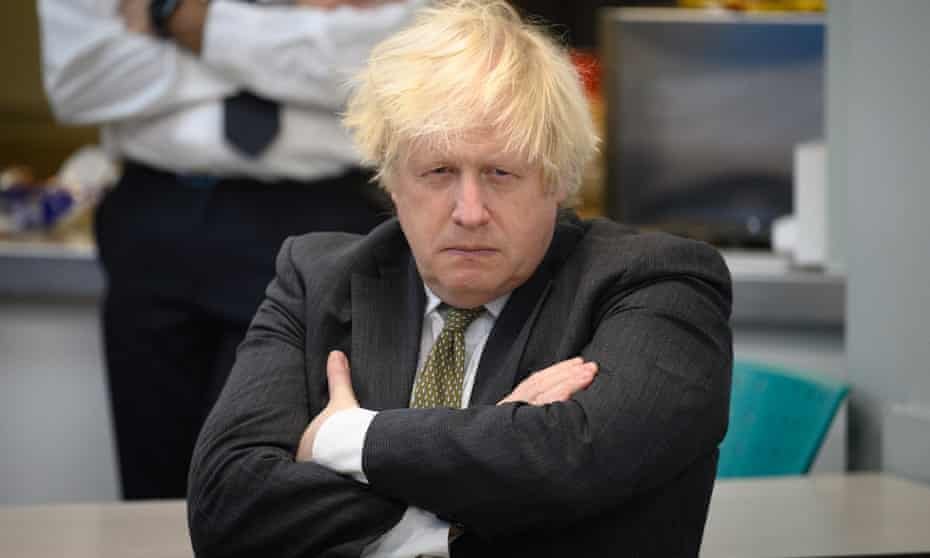
I’m still fuming to be honest. Trying to distance my professional self from my personal feelings, and give some unbiased judgement. I mean, I don’t know if I can do that. Some things are too embedded in one’s values.
*[EDIT: Since writing this last night, Thurs 13 Jan, and posting the following morning, ANOTHER two parties have been uncovered. Seems Dominic Cummings wasn’t bluffing with “more to come”… Two parties, the night before Prince Phillips funeral and the striking image of the Queen sat alone, with damage to Boris’ son’s swing and a colleague sent out with a suitcase to buy more booze among the claims. More here.]*
Back to the apology from BJ. As the New York Times calls it, the “self-abasing apology” – see full video clip from the PMQs below – fell short in a lot of people’s eyes, with a lot of references to ‘we’. The fact of the matter is that Boris denied knowing about parties, yet he attended one.
The only thing that angers me is the defence coming from the word party. Anyway, not enough time or blood pressure to go into that, right now.
As succinctly quoted in The Week, another Tory MP told The Guardian: “I’ve not seen such a half-arsed apology since my child apologised for spilling all the milk.”
Other (in)famous apologies
Videos below: 1) Bill Clinton after being pretty blunt in his “I did not, have sexual relations” speech, then apologising for… being caught? and 2) the Oscars Moonlight/La La Land debacle from 2017.
Further reading:
Did you know the average Brit says sorry eight times a day?! That, and more reasons why we say sorry so much here.
Why a sincere apology? “By owning our mistakes, we have the chance to rebuild trust, validate experiences and heal wounds. But when we refuse to take ownership, we ignore the consequences of our actions and lessen the safety of the relationship, and ultimately, deepen the hurt.”
So, who can we expect an apology from next? Novak Djokovic, perhaps?
Bear in mind there is a lot that happens BEFORE the apology – it is the moral and ethical actions in hiding, ignoring or covering up that has possibly the greatest impact.
Let me know what you think, and sorry about the rambling… dammit, I’m too British!

The (non-strategic?) sharpshooter
The targeted problem solver. Someone external to the everyday, picking off particular problems, without the requirement of getting stuck into an organisation’s history, its biases and dragged into the day-to-day.
Following a valuable conversation with freelance Drive colleagues before Christmas – where I laid my thoughts about my business pretty bare – an interesting concept came up.

Focus on the target at hand | Mihai Lazar, Unsplash
We were talking about breadth vs depth, and the benefits of being a generalist as opposed to a specialist in a sector (more on that in another blog).
The concept was around the efficacy of having a tactical tool in your marketing armoury. A targeted problem solver. A sniper. A sharpshooter.
Someone external to the everyday, picking off particular marketing or comms problems, without the requirement of getting stuck into an organisation’s history, its biases and dragged into the day-to-day.
“If there was a problem / Yo, I’ll solve it /
Check out the hook while my DJ revolves it”
Of course you’re strategic
We’re all bloody ‘strategic’, aren’t we?! But the in-depth tone of voice review, competitor analysis and ‘getting under the skin’ of the brand is not always required to achieve certain objectives.
As an example, I recently worked with an education group that wanted to target a certain geographical audience (I dislike demographic, but it was), in order to make the most of an opportunity that had come their way.
Did I have thoughts about brand positioning? Yep.
Did I want to ensure tone of voice was consistent across all platforms, internal and external? For sure.
And did I feel like there were bigger communication challenges that should be looked at first? Oh, yes.
Focus
However, having a reduced brief, and not becoming enveloped by the day-to-day deliverables and challenges thrown up by JFDIs can enable clarity and focus on completing the task at hand.

Image credit: Paul Skorupskas, Unsplash
The quick turnaround requirement for my education client at the time was tactical, not wholly strategic. Or, as we came around to in our discussion before Christmas: strategically-informed or strategically-influenced tactics.
They had neither the budget or time to allocate to a wide-ranging strategic review, and – close your ears, comms colleagues – it wasn’t a priority.
They didn’t care. I didn’t have capacity. Yet, it’s a good result for both parties.
That’s the thing about projects – you never know where they will lead. I’m now talking with them about some wider marketing activity in different regions.
Now, let me climb back up on the fence.

There’s a balance, for sure. Strategy is important. You should have an overarching strategy in place, obviously. It helps decisions to be made, marketing and communication to flow and be effective, inform, educate and direct approaches, activities and behaviours, among 1,001 other elements.
There is a time and a place for all: strategy and time to think; tactical activity; and the sometimes-needed all-in, firefighting retainer (also known as get sh*t done).
So, three takeaways about the value of small, targeted projects – whether you are working in-house or as a freelance consultant?
Start small, prove your/its value, and be part of the conversation for the next stage.
(And that really reminds me, I need to do a Three Things video soon…)
So, what do you think about strategy and tactics? Is there a place for each? And are we all as strategic as we say we are…?
Let me know your thoughts below/drop me a note to adam@authenticcomms.co.uk.
Cover image credit: Max Larochelle (Unsplash)
PS: Hidden treat for reading this far. I actually wanted to put this absolute Jungle/DnB belter as the quote at the top, but wasn’t sure that it would get as many nods as Vanilla Ice… Enjoy!

What the hell am I doing this for?
Do what’s right for you! Why have I gone freelance? What are my reasons for working for myself? Flexibility and affirmation. A timely reminder for me, a blog to help other marketing or comms freelancers not feel overwhelmed.
(TL:DR – do what’s right for you)
I've been asking myself this question quite a lot over the past few months, especially in my recent summer break. Turns out that switching off the email, and deleting Twitter and LinkedIn apps, doesn't stop one's brain from going overtime.
There's a couple of reasons for me writing this now, but the catalyst is that my first year's books are being finalised. Nothing like a hunk of tax to get you thinking.
Why write this?

Firstly, I want it to act as a record for me, something codified, tangible and inescapable. Something to refer back to, cementing my purpose and reasons for starting my own thing.
Secondly, I know from many conversations that I am not alone in feeling occasionally overwhelmed.
“Feast & Famine: When you’re not so flush, panicking and scrambling to find work, worrying you’re not good enough, and then before you know it you’ve taken on far too much.”
Over the past 18 months, many peers, colleagues and other professionals have been so kind to share their wisdom and advice, or have been a sounding board. I'm honoured by their support, thankful for their cheerleading and openness to listen to (and occasionally be engaged by) my ramblings.
By sharing this, I hope it offers some support to my fellow professionals, especially if they need it too. We're all going through the same thoughts and feelings behind the sheen of the LinkedIn post.
I want this to act as a catalyst to empower you – YOU, reading this – as so many kind words have emboldened me.
Feast and famine

As many freelancers reading this will know, the ebb and flow of feast and famine is a lot at times. Worrying about not doing enough, versus taking on too much. The juggling, the desire to grow, affirmation, w*rk-l*fe balance.
Being honest, this is something that I still struggle with every few months. When you're not so flush, panicking and scrambling to find work, worrying you’re not good enough, and then before you know it you've taken on far too much.
But. It. Always. Evens. Out.
Hold tight, put things out there and pay it forward – things come back around.
Comparison is the thief of joy
There have been lots of new agencies starting up since the pandemic started (and in recent years, generally). I feel honoured to be mentioned in the same breath as some great professionals.

However, this has added pressure to my overthinking brain. Should I be doing more? Bring someone else on board? Say yes to that opportunity? Work more hours? Should I evolve into an agency?
I’ve worked hard and am blessed that I've come to the point in the past couple of months where I could expand the business and say yes to a lot more. Yet, this has caused worry and anxiety – can I fit it in? Should I pass up the opportunity?
I didn't expect Authentic to be more than me, and it may be more than me in the future. Not right at this moment.
Why go freelance?
In a word, flexibility.
I'd moved to four days a week in my previous role, and the agency were incredibly supportive. However, it still felt like a strain to be in the office or on certain projects, including commuting time, when I had two kids under three. That took me away from me spending more time with my family in the mornings and evenings.
I also had come to the stage in my career where I wanted more autonomy, empowerment – the ability to be in control of my own decisions and direction.
In another word, affirmation.
Maybe not from myself, but proof of worth and value from others. The thanks, the appreciation, the underlining that what I was doing is good enough. Imposter syndrome blog coming soon.
If either of these points ring out to you, and you’re interested in speaking about making the move to freelance, get in touch. More than happy to have a chat and share my experience as others did for me.
So, what now?

In short, I’m slowing my roll. I'm trying to run, when I know a decent walk would be far more comfortable. That's a pace with growth and next steps coming at the right time for me.
I'm going to revert to four days a week – starting with saying no to projects that (in my heart of hearts) know would be a stretch for me. Fridays and weekends are time for me and the family. I want to get my evenings back and try some semblance of a routine, not just laptop out and chip away at an endless to-do list…
Might change in a few months, and will revisit in Jan next year.
Hope this resonates and helps a few others realise it’s not just in their head. Sharing is caring and all that.
Look after yourselves; been a helluva a few years ✌️

"Goliath, WILL you leave David alone?"
Three examples of where the little guy takes on the big bully, in court. Intellectual property (IP), copyright infringement, branding challenges and marketing ownership are to be taken seriously. Just, mind how you go about it...
You can imagine the teacher shouting it across the classroom.
“You’re a lot bigger than him, so don’t be a bully!”
The David vs Goliath references pop up every now and again in the media.
Usual situation goes like this: Company A (well established, growing brand, upward trajectory, and a touch of hubris) sees that Company B (smaller, sometimes independent, slightly-to-hugely different offering) has a similar name. Then brings in the lawyers, straightaway.
Intellectual property (IP), and copyright infringement are to be taken seriously.
Just, mind how you go about it... try talking first.
(I realise these are all drinks related. Guess I’m an FMCG guy at heart…)
Oatly vs PureOaty
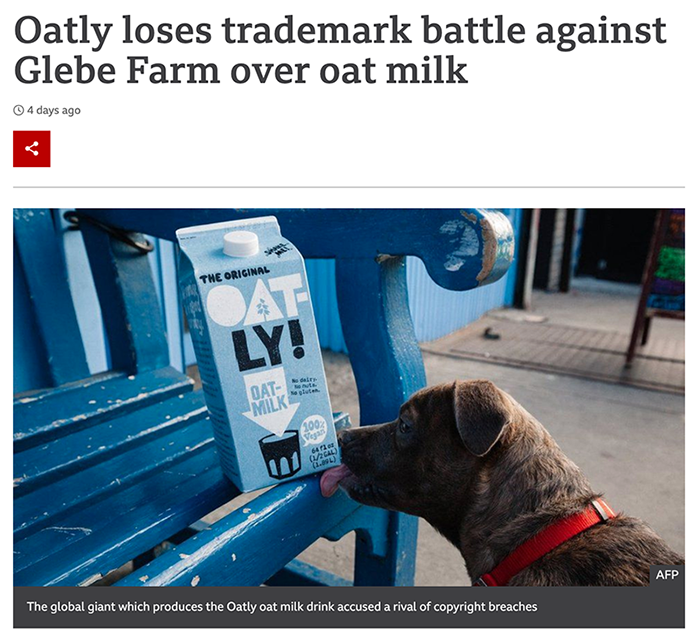
Been in the news this week, as Oatly (I’ve written before about its tone of voice) lost its court case against Glebe Farm in Cambridgeshire, who had a similar brand – I mean, it’s oat-based, so what are you going to call it… – called PureOaty.
Oatly brought legal action, saying PureOaty took “unfair advantage” and infringed five trademarks “with the ‘PureOaty’ name and the drink's packaging, as well as "passing off" their product as Oatly's.”
The High Court judge disagreed, saying
he “did not see "any risk of injury to the distinctive character" of the Oatly brand.
Goliath: “During the two-day hearing in June, the court heard Oatly had sold more than £38m worth of its "barista edition" oat milk, and more than £13m of other varieties.”
David: “Glebe Farm Foods, based near Huntingdon, launched an oat milk in 2019 called "Oat Drink", before rebranding it "PureOaty" in 2020.”
Click the below image to read more:
Redbull vs Redwell brewery
Way back in 2013, we had this cracker.
Global energy drinks behemoth Redbull lawyered up to challenge Norwich-based brewery Redwell – named after a street – accusing it of tarnishing Redbull’s reputation…
Redwell went to TM its name and Redbull’s IP lawyers hit the roof.
Goliath: In 2020, 7.9 billion cans of Red Bull were sold worldwide. A spokesman said: "There is no dispute here.
"Red Bull has long been willing [WILLING?! - AD] to allow Redwell to maintain its mark for beer so long as they do not use it for energy drinks."
David: “Redwell said it had never had any intention to produce energy drinks at its brewery which employs eight people in Norwich.”
Click the below image to read more:

Brewdog’s Lone Wolf brand vs Brum’s Lone Wolf pub
And then there was the one where a spirit brand tried to sue a pub.
In the news recently, this goes back to 2017, when Brewdog’s (probably punk) spirit brand Lone Wolf took umbrage at the fact that a Birmingham pub wanted the same name. HOW DARE IT?! People will get so confused when they order a bottle and a pub turns up.
Brewdog founder blamed ‘trigger happy’ lawyers, who had been put on '“washing up duty for a week”. The pub owners, who spent money changing the branding to the ‘Wolf’ pub, weren’t best pleased.
Goliath: Watt, who offered to send them some of his new spirit range (any PR is good PR?) runs the once 'punk' upstart, that employs 1,600 people and is worth an estimated $2bn.
David: Every 2nd Wednesday of the month, the Wolf has a Quiz Night: “Get those cogs working & win yourselves a £30 bar tab.”
Click the below image to read more:

Have you any other excessive examples of David vs Goliath? Put them in the comments below, or let me know and they can be added to the list.

Divide and e-conquer – segment your emails like a boss
Email segmentation and personalisation is where it’s at. Be brave and make the time upfront to adapt your email database and personalise communication for B2B and B2C. You will reap the rewards of a few small changes.
Email segmentation is where it’s at. Be brave and make the time upfront. You will reap the rewards of a few small changes.
If you have an email database (yes, I know, some still don’t), and have enough capacity to send out a regular email ‘to all’, then you definitely have enough time to quickly adapt content to potentially get more opens.
We’re not talking massive overhauls here – minor tweaks taking seconds could have a demonstrable impact.
Of course, it is easier to send the same to all. All I implore is, that after reading this, you try NOT TO.
By building up knowledge about your customers and their background or experience, you can segment and send more engaging, relevant and even personalised messages.

Photo by NordWood Themes on Unsplash
As Neil Patel says: “In 2019, Campaign Monitor revealed across several industries, the average open rate was 17.92% and the average click-through rate was 2.69%.
That means that over 82% of people don’t open emails and that about 97% of them don’t bother to follow any of the links.”
Those numbers are insane. And here are some practical tips to help you change that for your business, brand, organisation and – crucially – your objectives.
Don’t spray and pray
Sending your whole database the same email – subject line, images, content – is sometimes needed due to time pressures or other constraints, yet should be avoided where possible.
You can segment your mailing list in a number of ways, if you have the information from sign up in your database (location, age, gender for B2C and seniority, sector and so forth for B2B). [see below if you don’t have this data]
My one piece of advice is to start small. Once you see positive activity, you can go further. For instance, in the B2B world, begin by segmenting by type of company or industry and using language appropriate to them.
This takes time upfront, but done correctly, you'll not only improve both your open and engagement rates, in turn you’ll see an improvement in your conversion rates – more people clicking through the CTA to your site.
Only email addresses? A/B test time
Nothing more than emails in your database? No problem, and still no excuse.

Photo by Antonio Feregrino on Unsplash
Well, there actually is a problem, and you need to revisit this, looking at what and how you gather your information.
Of course, it is easier to send the same to all. All I implore is, that after reading this, you try not to. Give your next email a tweak with these in mind, even if not ready to segment your audience:
Think who the reader is – could you show more personality/point of difference?
Change a subject line to be more funny/engaging;
Ask a question;
Make it shorter than you normally would;
Be more intriguing/teasing; or
Use more, or fewer, acronyms or jargon
Test and learn – see what makes the difference, measure the (topline) results and you’ll go one of two ways:
1) it didn’t work, you know to not try again,
2) it did work, and you can use this experience to inform other activity.
No harm, no foul.
Personalisation: the {firstname} of the game
Getting the first name for ‘Hi {firstname}’ is so valuable, as is knowing the company/sector/region/seniority of the person you’re contacting as your organisation or brand.
Personalising subject lines can improve open rate by 26%, according to Campaign Monitor.
More great email titbits here from Campaign Monitor, including the triumvirate of relevant, timely and ‘comes from a person’.
If in doubt, ask an expert (I did) – Mark Daniels, Head of Digital, The Big Table Group:

“Two things: use your subject lines wisely, especially if you are using a generic message to your database. The subject line is the difference between an email being opened and an email disappearing in to the bin.
“And from a GDPR perspective, remember you shouldn't be holding data unnecessarily. So many Boards focus on how many people are in the database rather than the quality of the data; as a result, the CRM managers aren't getting rid of disengaged contacts from the database to keep their numbers higher. This just means you're sending emails to people who haven't opened emails in months if not years.
It's a waste of your ESP (email service provider) license cost and detrimental to the performance of the email.”
Thanks to Mark for his insight – you can find him on LinkedIn at www.linkedin.com/in/markjdaniels and check out his brilliant job-seeking podcast (currently on hiatus) www.desperatelyseekingsalary.com/podcast.
Want to ask a question or have a chat? My LinkedIn and Twitter are always open.
Further reading:
How to Write Email Subject Lines That Will Increase Your Open Rate By 203% (Neil Patel)
Oldie but a goodie for inspiration: 30 Ways to Slice Your Email Database for Better Email List Segmentation (HubSpot)
Main image courtesy of Charles Deluvio on Unsplash